(한국전쟁사) 한국의 분단 1945 -1948 post # 6

Prof. Kathryn Weathersby

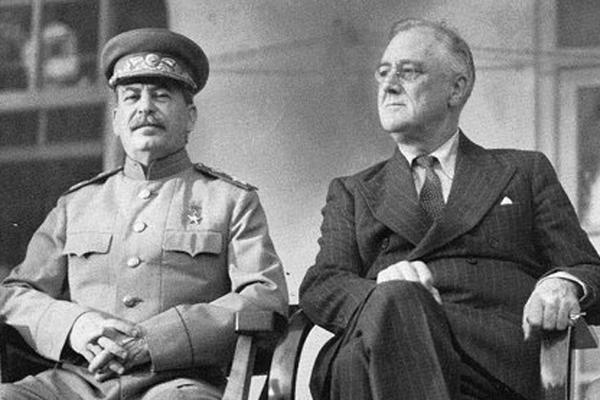
스탈린 루즈벨트.jpg

9월 런던에서 연합군 외무장관 회의가 열렸을 때, 몰로토프 외무장관은 일본의 점령에 대한 통제권 확보라는 모스크바의 최우선 과제를 밀어붙이면서 한국문제를 옆으로 치워놓았다. 스탈린은 일본이 재무장하여 아마도 미국과 함께 소련의 극동지역을 다시 위협할 것이라고 생각했기 때문에, 가능한 한 강력한 목소리로 패전국 점령정책을 형성할 수 있도록 하는 것을 가장 중요하다고 생각했다. 따라서 몰로토프는 로버트 번즈 국무장관이 회담의제에 이 문제를 포함하는 것을 거부한 이후에도, 이 문제를 계속 제기했다.

회의 성명서에서, 소련 외무장관은 일본 점령에 대한 책임이 4개 동맹국에 있기 때문에 점령의 동맹 세력에 달려 있기 때문에 미국 단독으로 점령행정을 수행해서는 안된다고 주장했다. 그는 미국이 의장담당하고 4개국의 동맹국의 대표로 이루어진 동맹국 통제 위원회가 도쿄에 수립되어야 한다고 제안했다. 그러나 몰로토프의 노력에도 불구하고, 회의는 모스크바가 바랐던 것보다 훨씬 작은 권한을 가진 위원으로 구성된 극동자문위원회를 수립하는 것에 합의했다.

스탈린은 일본 문제를 포기하지 않았다. 소련 지도자는 10월까지 미국과의 교신에서 새로운 전술을 시했으며, 루마니아와 비슷한 통제 위원회 수립을 주장했다. 맥아더 장군은 루마니아 소련 사령관이 루마니아 통제위원회의 의장으로 마지막 결정을 내렸던 것과 같이 이 위원에 대해 최종 결정을 내렸다. 소리를 냈던 것과 마찬가지로이위원회에 최종 목소리를 냈다. 스탈린은 미국으로부터 만족스러운 합의도출에 실패했으며, 협상은 11월까지 계속되었다.

대일본정책에 대한 미국과의 외교적 대립으로 인한 영향의 하나는, 주한소련군 사령관 치스챠쿄프 장군이 남한의 미군사령관과 분단으로 인해 조성된 여러가지 문제에 대한 협의의 거부였다. 소련의 점령 당국이 그들의 지역을 봉쇄했기 때문에, 북한에서 채굴된 석탄은 남쪽으로 가지 못했고, 남한에서 생산된 농산물은 북한으로 가지 못했다. 한국에서 사용되는 전력의 85 %가 북한에서 생산되었고, 인구의 3 분의 2가 남부 지역에서 살았다. 따라서 북한에서 남한으로 보내지던 전력의 차단은 남한지역에 심각한 전력부족을 초래했다. 운송, 우편 배달 및 기타 많은 일상 분야에서도 혼란이 있었다. 9 월 중순 치스챠코프 사령관을 이러한 문제를 논의하기 위한 회의에 초청하기 위해 미국 장교단이 평양의 소련 사령부를 방문했다. 한 관리들에 의해 치 시아 코프 (Chistiakov) 장군이 그러한 문제를 논의하기위한 회의에 초청하기 위해 평양의 소련 본부를 방문했다. 소련 사령관은 미국을 친절하게 응대했으나 이런 현안문제에 대한 협상을 시작하기 위한 초대에 반응을 보이지 않았다.

일본에 대한 미국의 비타협적인 태도는 모스크바를 한국에 대한 신탁통치를 향후 영토획득을 위한 교섭용 칩으로 사용하겠다는 생각을 버린 것으로 보인다. 그 대신 일본의 점령에 관한 협상이 1945 년 가을까지 계속되었지만, 북한에 있던 소련 점령당국은 자신의 지역에서 별도의 통치구조를 만들기 위한 조치를 취했다. 따라서 모스크바의 외교적 노력의 결과가 무엇이든, 소련은 장차일본공격에 대한 믿을 수 있는 완충지역 뿐만아니라 가치있는 경제적 자원의 유용한 원천으로 적어도 한국의 북쪽 절반을 확보하였다.

다음 포스팅에서는 북한에 소련이 만든 통치구조의 형태를 살펴보겠으며 그 이후 미국이 한국점령이후 취한 소련의 경우와 상당히 다른 조치들을 알아보겠습니다.


This page is synchronized from the post: ‘(한국전쟁사) 한국의 분단 1945 -1948 post # 6’

(Korean War History) The Division of Korea, 1945-1948, Post # 6

by Prof. Kathryn Weathersby

스탈린 루즈벨트.jpg

When the London Conference of Allied Foreign Ministers opened in September, Foreign Minister V. M. Molotov put the Korean issue to the side while he pressed for Moscow’s first priority – securing some control over the occupation of Japan. Since Stalin assumed that Japan would rearm and again threaten the Soviet Far East, probably in conjunction with the United States, he considered it of utmost importance to guarantee as strong a voice as possible in shaping occupation policy for the defeated enemy. Molotov therefore continued to raise the issue, even after Secretary of State Robert Byrnes refused to include it on the conference agenda.

In a statement to the conference, the Soviet foreign minister argued that since the responsibility for the occupation of Japan rested on the four allied powers, the administration of the occupation should not be carried out solely by the United States. He proposed that an Allied Control Council for Japan be established in Tokyo, chaired by the United States, with representatives of each of the four allied powers. Despite Molotov’s efforts, however, the conference agreed only to establish a Far Eastern Advisory Commission, whose members would have far less power than Moscow sought.

Stalin refused to give up on the Japan issue. In correspondence with the Americans through the month of October, the Soviet leader tried a new tactic, arguing that a Control Commission should be established similar to the one set up for Romania. General MacArthur would have the final voice on this commission, just as the Soviet commander in Romania had the final voice as chairman of the Romanian Control Commission. Stalin failed to get a satisfactory agreement from the Americans, and negotiations continued through November.

One effect of this diplomatic standoff with the US over Japan policy was that the commander of Soviet forces in Korea, General Chistiakov, refused to negotiate with the American command in the South over the serious problems created by the division of the country. Since Soviet occupation authorities had sealed off their zone, coal mined in the North could not reach the South and agricultural products produced in the South could not reach the North. Eighty-five percent of the electricity used in Korea was produced in the North, while two-thirds of the population lived in the southern zone. Stopping the flow of power from the North to the South therefore caused severe power shortages in the southern zone. There were also disruptions in transportation, mail delivery, and many other areas of daily life. In mid-September a group of American officers visited Soviet headquarters in Pyongyang to invite General Chistiakov to a conference to discuss such problems. The Soviet command received the Americans cordially, but they did not respond to the invitation to open negotiations on these urgent issues.

It seems that American intransigence on Japan led Moscow to abandon the idea of using trusteeship over Korea as a bargaining chip for further territorial gains. Instead, while negotiations over the occupation of Japan continued through the fall of 1945, Soviet occupation authorities in northern Korea took steps to create a separate governing structure for their zone. Thus, whatever the eventual outcome of Moscow’s diplomatic efforts, the Soviet Union would ensure that at least the northern half of Korea would become a reliable buffer against future attack from Japan, as well as a readily available source of valuable economic resources.

The next post will examine the type of governing structure the Soviets created in the North, before we turn to the very different steps the Americans took as they began their occupation of the South.


This page is synchronized from the post: ‘(Korean War History) The Division of Korea, 1945-1948, Post # 6’

(한국 전쟁사) 한국의 분단 1945 - 1948, post 5

Prof. Kathryn Weathersby

스탈린 루즈벨트.jpg

전번 포스팅에서 언급한 바와 같이 일본이 항복하기 전날, 스탈린은 포츠담에서 동맹국들이 합의한 협정을 변경한, 한국에 두개의 점령구역을 만들자는 미국의 갑작스런 제안을 반대하지 않았다. 그러나 8 월 말, 적군(소련군)이 획득하기로 예정된 영토였던 만주 항구와 쿠릴 열도 (Kurile Islands)에 대한 통제권을 확보하자마자, 소련 외무부는 한국으로 관심을 돌렸다. 9월 11일 한국에 대한 정치적 해결을 논의하기 위해 런던에서 열린 외무장관 회담에서 소련 대표단은 미국의 한국에 대한 신탁통치 구상에 어떻게 하면 최선의 접근을 할 수 있는가를 논의하기 위한 준비를 했다.

소련 외교부가 준비한 브리핑 보고서는 스탈린이 루스벨트 대통령과의 대화에서 요구했던 한 가지 조건, 즉 한반도에 외국 군대가 주둔하지 않는다는 것을 소련 대표부가 요구하는 것을 지시하는 것부터 시작했다. 그들은 소련군은 미군이 남쪽에 주둔하고 있는 한 한국에 주둔할 것이며, 2년 정도 될 것이라고 특정했다. 그 이후 점령군이 철수하고 4개국 신탁통치를 시작할 것을 제안했다.

소련 외무부 브리핑 페이퍼는 신탁통치의 목표가 “한국민의 정치적, 경제적 그리고 사회적 회복 그리고 독립을 향한 한국인들의 진보적 발전의 촉진을 지원”을 제공하는 것이하는 미국의 이상적인 구상을 반복했다. 한편, 소비에트 대표단에 대한 지시는 1930년 후반부터 소련의 외교정책을 이끌어 왔던 영향력 전략의 범위에 기초하고 있었다. 그리하여, 소련 외무부는 신탁통치에 대한 미국의 구상을 승전국이 한국과 일본에서 원하는 영토를 통제할 수 있는 메카니즘으로 보았다.

모스크바의 우선 과제는 블라디보스톡의 해군 기지와 여순항의 만주 해군기지간의 항로에 대한 안전을 확보하는 것이었다. 따라서 소련 대표단은 한국의 부산 및 인천항 뿐만 아니라 제주도에 대한 배타적인 통제권의 확보를 요구하도록 지시를 받았다. 미국이 이러한 양보에 동의하도록 설득하기 위해 소련 외교관들은 미국이 “태평양에서 전략적 지역을 얻기를 바랄 수 있다”고 언급했으며, 이는 미국이 해군기지로 사용하기 위해 일본이 장악하고 있던 태평양의 여러 소규모 도서를 해군기지로 사용하기 위해 장악하고자 하는 미국의 의도를 고려한 것이었다. 만일 미국이 모스크바의 요구를 거부하면, 소련 외교관들은 한국의 세 지역에 대한 소-중 공동 통제를 제안 하고자 했다. 소련은 포츠담 회담에서 중국과의 별도 회담을 통해 양국이 러시아가 건설한 만주철도와 항구에 대한 공동통제에 합의했던 전례가 있었다.

둘째, 소련 외무부는 한국에 대한 신탁 통치가 전략적으로 중요한 일본의 도서를 한국에 병합함으로써 이를 통제할 수 있는 방법을 제공할 수 있을 것이라고 생각했다. 소련 대표단은 쓰시마가 한국으로 넘겨져야 한다고 요구했으며, 이는 “역사적으로 쓰시마가 일본이 대륙국가 특히 한국에 대한 공격적인 행동의 기반으로의 역할을 했다”는 근거에 바탕했다. 예상했던 것처럼 미국인들이 이것을 거부했을 때, 소련은, 미국이 일본에서 점령했던 태평양의 도서, Bonin, Volkanos, Marianas, Carolinas 및 Marshall Islands에 대한 국제 신탁 통치를 실시할 것을 제안했다. 소련 대표단은 미국이 부산, 인천, 제주도에 대한 요구에 동의 동의하면 상기한 제안에서 물러설 수 있다고 제시했다.

결국, 소련 대표단은 런던에서 한국에 대한 신탁통치에 대한 자신들의 제안을 제기하지 않았다. 다음 포스팅에서 우리는 외무장관 회담에서 왜 한국 문제에 대한 토의가 지연되었으며 어떻게 이런 환경이 한반도의 분단을 고착시켰는지를 알아 볼 것이다.


This page is synchronized from the post: ‘(한국 전쟁사) 한국의 분단 1945 - 1948, post 5’

(Korean War History) The Division of Korea, 1945-1948, Post # 5

Prof. Kathryn Weathersby

As we discussed in the last post, the day before Japan surrendered, Stalin made no objection to the sudden American proposal to create two occupation zones in Korea, which changed the agreement the allies had made at Potsdam. However, in late August, as soon as the Red Army secured control of the territories they were slated to acquire – Manchurian ports and the Kurile Islands – the Soviet Foreign Ministry turned its attention to Korea. It prepared to discuss the political settlement for Korea at the meeting of the Council of Foreign Ministers that would open in London on September 11 by working out how the Soviet delegation could best approach the American idea of trusteeship for Korea.

The briefing paper the Ministry prepared began by instructing the Soviet delegation to insist on the one condition Stalin had demanded in his conversation on Korea with President Roosevelt: that no foreign troops would be stationed on the peninsula. They were to specify that Soviet forces would remain in Korea for as long as American troops were in the south, presumably for two years. After that time, occupation forces would withdraw and the proposed four-power trusteeship would begin.

The Foreign Ministry’s briefing paper then repeated the idealistic American formulation that the purpose of the trusteeship was to provide “assistance in the political, economic, and social restoration of the Korean people and the facilitation of their progressive development toward independence.” The instructions to the Soviet delegation, however, were based on the spheres of influence strategy that had guided Soviet foreign policy since the late 1930s. Therefore, the ministry viewed the American idea of trusteeship as a mechanism through which the victorious powers would gain control over desired portions of Korea, as well as of other former Japanese territories.

A priority for Moscow was to secure the sea lanes between its main naval base in Vladivostok and its Manchurian base at Port Arthur. Therefore, the Soviet delegation was instructed to demand exclusive control over the Korean ports of Pusan and Incheon, as well as Cheju Island. To persuade the US to agree to these concessions, the Soviet diplomats were to mention the Americans’ “wish to receive for themselves strategic regions in the Pacific Ocean,” a reference to the US intention to hold onto several small Pacific islands seized from Japan in order to use them as naval bases. If the Americans rejected Moscow’s requests, the Soviet diplomats would propose joint Soviet-Chinese control of those three Korean territories. There was a precedent for such an arrangement, since the Soviet Union had reached agreement with China in separate talks during the Potsdam conference that the two states would jointly control the Russian-built Manchurian railroads and ports.

Secondly, the Foreign Ministry thought a trusteeship over Korea might provide a way to gain control over a strategically important Japanese island by annexing it to Korea. The Soviet delegation was to demand that Tsushima be transferred to Korea, on the grounds that “throughout history” it “had served as a staging ground for aggressive actions by Japan against the continental countries and in particular against Korea.” When the Americans refused this demand, as expected, the Soviets would propose that they create an international trusteeship for the Pacific islands the US had seized from Japan: Bonin, and the Volkanos, Marianas, Carolinas, and Marshall Islands. The Soviet delegation would then offer to back away from this proposal as long as the Americans agreed to their demand for Pusan, Incheon, and Cheju Island.

In the end, the Soviet delegation in London never put forward its proposal regarding a trusteeship for Korea. In the next post, we will examine why discussion of the Korean issue was delayed at the Foreign Ministers’ Conference and how this circumstance solidified the division of the peninsula.


This page is synchronized from the post: ‘(Korean War History) The Division of Korea, 1945-1948, Post # 5’
(한국전쟁사) 한국의 분단 1945 - 1948 post # 4

전번 포스팅에서 우리는 일본군의 항복을 규정으로 하는 일반명령 제 1호의 일부에 미국이 38선 이남의 한국에 미국이 일본군의 항복을 받아내는 책임이 있다는 제안을 1945년 8월 10일 갑작스럽게 결정했다는 것을 알아 보았다. 미국은 일본이 곧 항복 할 것을 알았기 때문에 지난달 막 체결한 포츠담 협약의 변경을 제안했다. 전쟁은 예상했던 것처럼 1년이나 그이상 계속되지 않을 것이어서, 이제 전후 정치적 구상에 관한 문제가 시급한 주제였다.

미국은 소련군이 한국에 대한 통제권을 장악 서울에 친 모스크바 정부를 세우면, 일본에서의 공산주의 운동이 더욱 강해질 것이라고 우려했다. 사실, 전후 한국에 대한 모스크바의 목표는 어떤 정부가 설립되던 소련에 “우호적”인 것을 보장하는 것이었다. 이 자체는 이데올로기를 전파하려는 것이 아니었다. 그 대신 한국에 우호적인 정부를 갖는 것이 중요했으며, 그렇게 해야만 부활한 일본, 혹은 미국과 일본 연합군이 한반도를 이용하여 소련 영토를 영토를 공격하는 것을 막을 수 있었기 때문이었다. 그렇다면 왜 스탈린은 한반도 남부 지역에 군대를 배치하겠다는 미국의 갑작스런 제안에 동의했을까? 소련 지도자는 포츠담에서 합의했던 협정을 존중하라고 어렵지 않게 요구할 수 있었다. 게다가, 적군(소련군)은 이미 한반도 북부에 있었고, 미국은 한국에 상륙할 준비가되어 있지 않았다. 그러므로 소련이 한반도 남쪽 끝까지 진출을 계속하는 것은 간단하고도 정당하다고 할 수 있었다.

그러나 스탈린은 다른 결정을 내렸다. 그는 8 월 14 일 일반명령 제 1호 초안을 받은 후, 같은 날 그 명령의 내용에 관계없는 두가지 수정조항을 제안했다. 첫 째는 쿠릴 열도 전체가 소비에트 지역에 포함된다는 것이었다. 이것은 일본인들이 거주하고 있는 홋카이도 북쪽, 쿠릴열도의 남쪽 끝 4개의 섬이 소련의 통제하게 놓인다고 얄타협정의 내용을 명확하게 한 것을 의미했다. 이 네 섬의 운명에 관한 문제는 소련과 일본이 태평양 전쟁을 종식시키는 평화조약에 도달하지 못했던 이유였다. 이 문제는 모스크바와 토쿄간 심각한 분쟁으로 남았다.

스탈린이 제안한 두번째 수정조항은 훨씬 더 과감했다. 그는 홋카이도 절반 북쪽을 소련군이 점령할 것을 요구했다. 그는 미국인들이이 제안을 거부할 것을 알았기 때문에, 그는 일본이 1919 년부터 1921 년까지 소련 극동을 점령했었기 때문에, 일본 영토의 일부 지역에 러시아군이 점령하지 않으면 러시아 국민들이 매우 실망할 것이라고 주장했다. 그는 “제시된 겸손한 제안에 어떤 이의도 없는 것이 가장 바라는 바이다”라고 덧붙였다.

이렇게 스탈린은 조심스럽게 일본에 점령할 지역을 조심스럽게 최우선적으로 요구하면서, 한반도에서 미국이 점령지역을 만드는 것에 대해서는 언급하지 않고 받아 들었다. 그는 적군(소련군)이 38도 선에서 정지하고 만일 그선을 넘었다면 그 선 북쪽으로 철수할 것을 지시했다. 왜 소련 지도자가 남한을 미국에 양보했는지 분명하게 밝혀주는 문서는 없다. 이 핵심적인 문제를 이해하기 위한 최선의 방법은 소련 지도자가 그 이후 3개월 동안 한반도 문제를 유보하면서 일본에 대한 목표를 어떻게 추구했는지 심도 깊게 검토하는 것이다.

다음 포스팅의 주제는 이 문제가 될 것이다.


This page is synchronized from the post: ‘(한국전쟁사) 한국의 분단 1945 - 1948 post # 4’

(Korean War History) The Division of Korea, 1945-1948 post # 4

Flag_map_of_Divided_Korea_(1945_-_1950).png.png)

We saw in the last post that the US made a sudden decision on 10 August 1945 to propose, as part of General Order Number One governing the surrender of Japanese forces, that Americans take care of this responsibility in Korea south of the 38th parallel. The US proposed this change in the agreement it had just made at Potsdam the previous month because Washington learned that Japan would soon surrender. The war was not going to continue for another year or more, as had been expected, so issues concerning postwar political settlements were now urgent.


Americans were worried that the communist movement in Japan would become stronger if the Soviet army gained control of Korea and set up a pro-Moscow government in Seoul. In fact, Moscow’s goal for postwar Korea was to ensure that whatever government was established there be “friendly” to the Soviet Union. This was not a matter of spreading their ideology, in itself. Instead, having a “friendly” government in Korea was important because only then could Seoul be counted on to prevent a resurgent Japan, or a US/Japan coalition, from using the peninsula to attack Soviet territory. So why, then, did Stalin agree to the Americans’ sudden proposal to place their army in the southern half of Korea? The Soviet leader could easily have insisted that the US honor the agreement it had just reached at Potsdam. Moreover, the Red Army was already in northern Korea while the Americans were not prepared to land soon in Korea. It would therefore have been both simple and justifiable for the Soviets to continue their advance to the southern tip of the peninsula.

However, Stalin made a different decision. After he received the draft of General Order Number One on August 14, he replied the same day that he had nothing against the substance of the order but would like to propose two amendments. The first was that all of the Kurile Islands be included in the Soviet zone. This clarification of the Yalta agreement meant that the southernmost islands of the chain, the four just north of Hokkaido that were inhabited by Japanese, would be placed under Soviet control. The issue of the fate of these four islands is the reason the Soviet Union and Japan never reached a peace treaty ending the Pacific War. It remains a serious dispute between Moscow and Tokyo.

Stalin’s second proposed amendment to General Order Number One was much bolder. He asked that the northern half of Hokkaido be included in the area to be occupied by Soviet troops. Since he knew the Americans would resist this request, he claimed that because Japan had occupied the Soviet Far East from 1919 to 1921, the Russian people “would be gravely offended if the Russian troops had no occupation area in any part of the territory of Japan proper.” He added that he was “most anxious that the modest suggestions set forth should not meet with any objections.”

Thus, while Stalin cautiously advanced a request for an occupation zone in Japan, his top priority, he accepted without comment the creation of an American zone in Korea. He ordered the Red Army to stop at the 38th parallel and to withdraw to the north of that line if they had already crossed it. No document has come to light that reveals with certainty why the Soviet leader ceded southern Korea to the US. The best we can do to understand this key question is to examine carefully how the Soviet leader pursued his goals toward Japan over the next three months, while keeping the Korea issue on hold. The next post will turn to this subject.


This page is synchronized from the post: ‘(Korean War History) The Division of Korea, 1945-1948 post # 4’

Your browser is out-of-date!

Update your browser to view this website correctly. Update my browser now

×