(한국전쟁사) 한국의 분단 1945 - 1948, post # 10

캐더린 위더스비 교수 씀

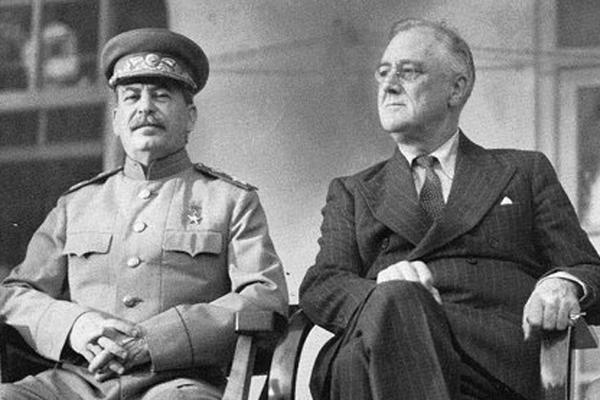
스탈린 루즈벨트.jpg

우리는 1945년가을까지 소련이 미국의 일본점령정책에 대한 소련의 비토권한을 인정하도록 설득하는 동안 한국문제를 보류시켰다는 것을 알아 보았다. 중요한 문제에 대한 긴 협상이 마침내 12월 초에 이루어졌으며, 모스크바는 일본에 대한 미국의 완전한 통제를 받아 들여야 했다. 동시에 미국무장관 번즈(Byrnes)는 몰로토프에게 갑자기 2주후에 모스크바에서 제2차 연합국 외무장관 회담을 제안했으며, 그리하여 영국, 소련 그리고 미국 외교관들은 1월 UN 총회에 앞서 그들에게 어려움을 야기시키는 문제에 대한 토의를 할 수 있었다. 몰로토프는 자신의 관심을 한국을 포함한 다른 지역으로 돌릴 수 있었기에 즉각 동의했다.

미국 대사 해리먼이 모스크바로 가기 몇주전에 국무장관 번즈는 그에게 소련이 일본 점령 정책에 자신들의 영향력을 합리적으로 행사하는데 만족하지 않는다면, 그들은 “우리의 정책과 이익에 반하는 다른 수단을 통해 극동지역에서 자신들의 안보를 구축하기 위한 시도”를 할 수도 있다고 경고했다. 영국 외무장관 어네스트 베빈 또한 모스크바 회담을 우려했다. 그는 영국과 미국이 회담을 준비하기 위한 충분한 시간이 없고 크리스마스 이전에 합의에 도달하라는 압력을 받음으로 인해, 나중에 후회할 수도 있는 해결책를 만들어 낼 수 있다는 것을 두려워했다. 그럼에도 불구하고 번즈는 밀고나갔으며, 소련과 지속적인 협력을 보여주기로 결정했고 이는 미국내에서 자신의 정치적 반대자들의 비판을 차단하기 위한 것이었다.

번즈의 한국문제에 대한 5개 전략은 미국과 소련의 목표와 인식에 엄청난 괴리가 있다는 것을 보여주었다. 국무장관은 만일 소련으로부터 한국의 독립과 통일을 보장받을 수 있다면 루즈벨트의 신탁통치 구상을 폐기하려고 모스크바에 갔다. 소련이 독립한국의 수립에 동의하지 않는 경우, 워싱턴은 제한된 기간동안 유엔에 의한 신탁통치를 수립하려고 있으며 이는 이탈리아의 식민지에 대해 미국이 제시했던 안과 유사했다. 미국 외교관들과 군사지도자들은 한국에서의 자신들의 위치가 “군사적 그리고 정치적인 관점에서 노출되어 있고 보호받지 못하고 있다”고 이해하고 있었다. 최소한 한반도의 북쪽부분이라도 자신들의 안보 완충지로 통제하고자 하는 모스크바의 결정을 잘 알지 못한채, 그들은 신탁통치를 소련이 한국을 석권할 가능성을 줄여주는 방법이라고 비현실적으로 보고 있었다. 그들은 또한 신탁통치가 점령국간의 긴장을 낮추어줌으로써 미군이 한반도에서 철수할 수 있기를 기대하고 있었다.

소련 외교관들은 모스크바 회담에서 미국의 외교관들보다 보다 분명한 관점을 가지고 있었으며, 그럼에도 불구하고 한국에서 유용한 해결책을 만드는 것은 어렵다는 것을 확인했다. 그들은 독일과 여타지역의 점령정책을 수립하기 위해 미국과 협조를 지속해야할 필요가 있었고 그리하여 한국에 통일정부를 수립하는 것에 반대하는 것이 정치적으로 적절하지 않다고 간주하고 있었다. 그러나 미국의 바람을 수용하는 것은 소련의 안보에 위험했다. 소련외무부가 모스크바 회의를 위해 마련한 간단한 보고서는 “만일 소련의 정책이 일본 침략자들의 군사적 능력의 파괴, 한국에서 일본의 영향력을 제거하는 것, 한국 인민의 민주주의(사회주의를 의미) 운동의 확대와 그들의 독립을 준비하는 데 있는지, 그런데 한국에서 미국의 활동을 판단해 보건데, 미국의 정책은 정확하게 정반대의 목표를 가지고 있다”고 기술하고 있다. 미국은 일본거류민들과 한국인 협조들이 지도적 위치를 떠났지만 구 식민지 행정기구들을 유지하고 있으며, 일본거류민들은 정치적 권리와 경제적 권리를 누리고 있었다. 결과적으로, 한국에서 일본을 배제해야하는 “하나의 점령정책을 만들어내고 실현하는 것이 한국의 통일을 회복하는데 주요한 장애물이다”

소련 외교부가 본 두번째의 문제는, 미국이 영향력을 행사한 서울의 비공산주의 정부는 한반도가 소련의 공격을 위한 교두보로 이용될 수 있는 위험을 만들어 내는 태도를 취할 수 밖에 없다는 것이다. 그러므로, “한국이 극동에서 우리에게 새로운 우려의 근거가 될수도 있는가의 문제는 한국의 미래정부의 성격에” 달려있을 것이다. 결과적으로 남한에서의 “다양한 정당과 단체들의 난립, 그들간 통합의 결여 그리고 미국의 교사”는 모스크바가 요구하는 성격을 지닌 한국정부를 만드는데 심각한 장애가 될 것이다

그럼에도 불구하고 모스크바 회담의 소련 대표들은 한국의 정부를 만들기 위한 어떤 메카니즘을 제안하였다. 다음 포스팅에서는 소련 외무부가 이런 중요한 임무를 해결하기 위해 고안한 복잡하게 얽힌 방안들을 알아보겠다.

[근거자료]
Foreign Relations of the United States, Volumes II and VI;

Jacob Malik, “On the Question of a Single Government for Korea,” 10 December 1945, Archive of the Foreign Policy of the Russian Federation (AVPRF) Fond 0102, Opis 1, Delo 15, Papka 1, Listy 18-21;

Petukhov, Adviser to the Second Far Eastern Department, “Soviet-American Occupation of Korea and the Question of Economic and Political Ties Between North and South Korea,” December 1945, AVPRF, Fond 0102, Opis 1, Delo 15, Papka 1, Listy 8-10]


This page is synchronized from the post: ‘(한국전쟁사) 한국의 분단 1945 - 1948, post # 10’
(Korean War History) The Division of Korea, 1945-1948 #10

스탈린 루즈벨트.jpg

We’ve seen that the Soviets put the Korea issue on hold through the fall of 1945 while they tried to persuade the Americans to grant them veto power over occupation policy for Japan. The long negotiations over that key issue finally ended in early December, with Moscow forced to accept complete US control over Japan. At the same time, Secretary of State James F. Byrnes suddenly proposed to Molotov that the allies hold a second meeting of the Council of Foreign Ministers, in just two weeks, in Moscow, so that the British, Soviet, and American diplomats could discuss the issues that were causing difficulties among them before the UN General Assembly met in January. Molotov immediately agreed, since he was ready to turn his attention to other areas, including Korea.

A few weeks earlier the American ambassador to Moscow, W. Averell Harriman, had warned Byrnes that if the Soviets were not reasonably satisfied with their influence over occupation policy for Japan, they would “attempt to build their security in the Far East through other means inimical to our policies and interests.” British Foreign Secretary Ernest Bevin also worried about the Moscow meeting. He feared that since the British and Americans did not have enough time to prepare for the conference and would be under pressure to reach agreements before Christmas, they would likely conclude settlements they would later regret. Nonetheless, Byrnes pressed ahead, determined to demonstrate continued cooperation with Moscow in order to fend off criticism from his political opponents at home.

The strategy Byrnes worked out for discussions over the Korea issue reveals the great gulf between American and Soviet aims and perceptions. The Secretary of State went to Moscow willing to abandon Roosevelt’s trusteeship idea if he could get a guarantee from the Soviets that Korea would be independent and united. In case the Soviets did not agree to establish an independent Korean government, Washington would advocate establishing a trusteeship under the United Nations for a limited period of time, similar to the arrangement the US had suggested for the former Italian colonies. American diplomats and military leaders understood that their position in Korea was “exposed and untenable…from both a military and political standpoint.” With little awareness of Moscow’s determination to secure control over at least the northern half of the peninsula as a security buffer, they unrealistically viewed trusteeship as a means to reduce the likelihood that the Soviets would dominate Korea. They also hoped that trusteeship would lower tensions between the occupying powers so that American armed forces could withdraw from the peninsula.

The Soviet diplomats were more clear-eyed than the Americans as they approached the Moscow conference, but they nonetheless found it difficult to craft a workable solution for Korea. They needed to continue cooperating with the US in setting occupation policy for Germany and other areas, so they regarded it as politically inexpedient to oppose the establishment of a unified government for Korea. However, accommodating American wishes was dangerous to Soviet security. A briefing paper the Foreign Ministry prepared for the Moscow meeting stated that “if Soviet policy is directed at the destruction of the military capability of the Japanese aggressors, at the eradication of Japanese influence in Korea, at the encouragement of the democratic [meaning socialist] movement of the Korean people and preparing them for independence, then judging by the activity of the Americans in Korea, American policy has precisely the opposite goal.” The US had retained the old colonial administrative apparatus, with many Japanese residents and Korean collaborators left in leading posts and had allowed Japanese residents to enjoy political rights and economic possibilities. As a consequence, the “main obstacle to the restoration of the unity of Korea is the working out and realization of a single occupation policy,” one which must exclude Japan from Korea.

A second problem, in the Foreign Ministry’s view, was that a non-communist, American-influenced government in Seoul would inevitably create pose the risk that the peninsula would be used as a bridgehead for an attack on the Soviet Union. Therefore, “the question of whether Korea will in the future be turned into a breeding ground of new anxiety for us in the Far East” will depend on “the character of the future government of Korea.” Consequently, the “multiplicity of political parties and groups” in southern Korea, “the lack of unity among them and the solicitations of the USA,” were a serious obstacle to creating a Korean government that had the character Moscow required.

Nevertheless, the Soviet delegation to the Moscow conference would have to propose some mechanism for creating a Korean government. In the next post, we will examine the convoluted formula the Foreign Ministry devised to solve this important task.

[Sources: Foreign Relations of the United States, Volumes II and VI; Jacob Malik, “On the Question of a Single Government for Korea,” 10 December 1945, Archive of the Foreign Policy of the Russian Federation (AVPRF) Fond 0102, Opis 1, Delo 15, Papka 1, Listy 18-21; Petukhov, Adviser to the Second Far Eastern Department, “Soviet-American Occupation of Korea and the Question of Economic and Political Ties Between North and South Korea,” December 1945, AVPRF, Fond 0102, Opis 1, Delo 15, Papka 1, Listy 8-10]


This page is synchronized from the post: ‘(Korean War History) The Division of Korea, 1945-1948 #10’

(한국전쟁사) 한국의 분단 1945 - 1948, post # 9

캐더린 위더스비 교수 씀

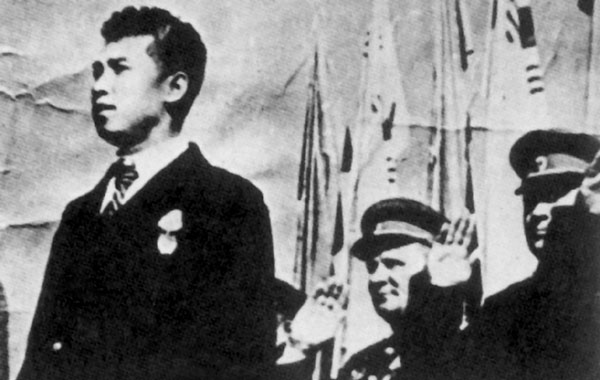
김일성 사진.jpg

우리는 소련 정부가 대일전이 끝나자 마자 미국과 한국 문제에 대한 최종적인 정치적 해결에 관련한 협상이 어떻게 될 것인가를 고려하지 않고, 한국의 자신들 지역에 믿을 만한 보안 완충지역을 만들려고 했다는 것을 살펴보았다. 결과적으로 그들은 장기간 통제를 보장해주는데 필요한 정치구조를 수립하기 위해 매우 신속하게 움직였다.

적군 장교(소련군 장교)들은 처음에는 소비에트 민간 행정부(SCL)과 별도의 북한 공산당조직을 창설했다. 그런데 10월 17일 치스챠코프가 스탈린이 직접 승인한 11월 전반부까지 민간 정부를 창설하라는 명령을 수령했다.이 정부는 “한국민의 민주분자” 25-30명으로 구성되어야 했으며 이는 일본과 협조하지 않은 하층계급 사람들을 의미했다.소비에트 민간행정부와 같이 9개의 부서를 지녔으며, “소련군 사령부의 지속적인 통제하”에 있어야 했다.

공산당 당원들이 국가의 항구적인 분단을 초래할 수 있다는 이유로 소비에트 지역에서 별도의 당조직 구성에 거부했던 것 처럼, 북한의 비공산당 정치지도자들도 별도의 정부기구 창설에 거부했다. 한 보고서에 따르면, 11월 중순까지 민주당 지도자 조만식은 김일성을 설득해서 서울로가서 전체 국가를 위한 중앙정부를 수립하여 정령으로 인한 국가의 항구적 분단을 막으려 했다.

이 시기의 문서는 아직까지 거의 공개되지 안았기 때문에, 우리는 소련의 행동에 대한 반대가 얼마가 광범위했는지 그리고 이에 대처하기 위해 적군(소련군)이 어떤 행통을 취했는지 알 수 없다. 그러나 우리가 아는 것은 11월 말까지 5개도 행정부서가 구성되었으며,이는 일본의 항복하자마자 한국의 정치운동가들이 전국적으로 구성했던 인민위원회를 기반으로했다는 것이다. 소련당국은 조만식을 인민위원회의 피라미드 구조상 우두머리에 위치시켰으며, 그때부터 모스크바의 정책은 일부 비공산주의 정당과 “통일전선”을 유지하는 것이었다. 그러나 행정부서의 각 예하조직마다 배치된 소련 고문관들은 모든 결정에 최종적인 권한을 가지고 있었다.

5개도 위원회는 신속하게 행동을 취하였으며, 석탄 채굴산업과 발전소를 위한 신탁을 창설하고, 한국 전신 전화국을 만들며, 철도를 한국 철도행정부의 감독을 받는 두개의 행정기구로 분리하는 소련고문관들의 초안을 승인했다. 모스크바가 북한에 제공하는 금융차관을 처리하고 통화를 발행하기 위해, 소련 관리들은 중앙은행을 수립했으며, 이는 조선은행의 평양지부를 바탕으로 했다.

적군(소련군)이 1945년 10월과 11월 자신들의 지역에서 급하게 통치구조를 수립하는 동안, 모스크바와 워싱턴은 일본에 창설될 통치기구에 대한 협상을 계속했다. 스탈린은 미국이 일본의 미래사회와 정부의 성격을 결정하는 배타적 권력을 가진다면, 일본은 재무장할 것이며 소련을 다시 위협하는 결과가 될 것이라고 생각했다. 그리하여 외무부장관 몰로토프는 일본점령을 위해 동맹국들이 수립하는 위원회에서 소련대표들의 비토권한을 확보하려고 지속적으로 노력했다. 그러나 미국은 소련 대표들은 미국 사령관을 조언할 수 있지만 미국은 유일한 점령국가로 자신의 결정을 자유롭게 할 수 있다는 주장을 확고하게 했다.

일본을 둘러싼 협상이 계속되는 동안, 모스크바는 한국에 대한 어떠한 공개적 정치적 해결도 거부했다.그들은 또한 한국의 공산주의자들에게 미국에 대한 강력한 비난을 하지 못하도록 했다. 그들은 한국이 일본의 노예화정책 때문에 신탁통치에 있어야, 일본이 인해 즉각적인 자치 정부를 준비하지 않고 한국을 떠났기때문이라는 미국무부의 성명을 비판하면서, 해방일보는 “자본주의의 지도자 미국과 프롤레타리아트 조국 소련의 이상은 한국에서 마찰없이 표현되었다”고 주장했다.

다음 포스팅에서는 1945 년 12 월 모스크바 연합국 외무 장관 회의에서 미국과 소련이 어떻게 한국에 대한 합의에 마침내 도달했는가와 그 해결책이 분단에 이르게 된 이유를 알아 볼 것이다.

[참고자료: Jeon Hyun Soo, “Sotsial’no-ekonomicheskie preobrazovaniia v severnoi Koree v pervye gody posle osvobozhdeniia, 1945-1948”; FRUS 1945, Volume VI; Eric van Ree, Socialism in One Zone, Stalin’s Policy in Korea, 1945-1947 (Oxford, New York, and Munich: Berg Publishers, 1989); Chong-sik Lee, Materials on Korean Communism]


This page is synchronized from the post: ‘(한국전쟁사) 한국의 분단 1945 - 1948, post # 9’

(Korean War History) The Division of Korea, 1945-1948. Post # 9

by Katherine Weathersby

김일성 사진.jpg

We’ve seen that as the war against Japan ended, the Soviet government was determined to create a reliable security buffer in their zone of Korea, regardless of what might happen in negotiations with the United States over the final political settlement for Korea. Consequently, they moved very quickly to establish the political structures needed to secure long-term control.

Red Army officials first created a Soviet Civil Administration and a separate communist party organization for the North. Then, on October 17 Chistiakov received an order approved directly by Stalin to create a civil government in the first half of November. This government was to be composed of 25-30 persons drawn from the “democratic elements of the Korean population,” meaning people from the lower classes who had not collaborated with the Japanese. It was to have nine departments, paralleling the structure of the Soviet Civil Administration, and must “be under the constant control of the Soviet Military Command.”

Just as communist party members had resisted the formation of a separate party structure for the Soviet zone since doing so suggested a permanent division of the country, non-communist political leaders in the North resisted the creation of a separate governing structure. According to one report, in mid-November the Democratic Party leader Cho Man-sik tried to persuade Kim Il Sung to travel with him to Seoul to establish a central government for the whole country, to prevent the occupation from permanently dividing the country.

Few documents from this period have been released thus far, so we do not know how wide-spread the opposition to Soviet actions was and what actions the Red Army took to deal with it. We do know, however, that by the end of November a Five Provinces Administrative Bureau was formed, based on the people’s committees that Korean political activists had formed throughout the country as soon as Japan surrendered. Soviet authorities placed Cho Man-sik at the head of the pyramidal structure of people’s committees, since at that period Moscow’s policy was to maintain a “united front” with certain non-communist parties. However, Soviet advisers attached to each department of the Bureau had the final voice on all decisions.

Taking action quickly, the Five Provinces People’s Committees approved plans drafted by Soviet advisers to create trusts for the coal mining industry and the electrical power plants, to form a Korean Post and Telegraph Administration, and to divide the railroads into two railway administrations, directed by a North Korean Railroad Administration. To process the financial credits Moscow would extend to North Korea and to issue currency, Soviet officials established a Central Bank, founded on the Pyongyang branch of the Choson Bank.

While the Red Army hastily established governing structures for its zone in October and November 1945, Moscow and Washington continued to negotiate over the control machinery that would be created for Japan. Stalin assumed that if the United States had exclusive power to determine the nature of the future Japanese society and government, the result would be a remilitarized Japan that would again threaten the Soviet Union. Foreign Minister Molotov therefore persistently tried to secure veto power for the Soviet representative in whatever council the allies would establish for the occupation of Japan. The Americans held firm, however, insisting that the Soviet representative would be able to advise the American commander but that the US, as the sole occupying power, would be free to make decisions on its own.

While these negotiations over Japan continued, Moscow refrained from taking any public stand on a political settlement for Korea. They also made sure Korean communists refrained from harsh criticism of the United States. While they criticized a State Department statement that Korea must be placed under trusteeship because her enslavement by Japan had left her unprepared for immediate self-government, Haebang Ilbo declared that “the ideals of the United States, the leader of capitalism, and the Soviet Union, the fatherland of the proletariat, are to be expressed in Korea without contradiction.”

In the next post we will look at how the Soviets and Americans finally reached an agreement on Korea at the Moscow Conference of Allied Foreign Ministers in December 1945 and the reasons this solution would lead to division.

[Sources: Jeon Hyun Soo, “Sotsial’no-ekonomicheskie preobrazovaniia v severnoi Koree v pervye gody posle osvobozhdeniia, 1945-1948”; FRUS 1945, Volume VI; Eric van Ree, Socialism in One Zone, Stalin’s Policy in Korea, 1945-1947 (Oxford, New York, and Munich: Berg Publishers, 1989); Chong-sik Lee, Materials on Korean Communism]


This page is synchronized from the post: ‘(Korean War History) The Division of Korea, 1945-1948. Post # 9’

(편집자 칼럼) 문정인 특보의 주한 미군철수 불가피론을 보며

문정인 특보가 평화협정이 체결되면 주한미군이 더 이상 주둔할 명분이 없어진다는 내용의 강연과 글을 썼다. 그래서 여기저기서 시끄러운 모양이다.

문정인의 주한미군 철수론의 뿌리는 노무현 정권 당시로부터 출발하는 것 같다. 당시는 전작권 전환이었다. 우리군이 전작권을 환수한다는 주장이었다. 그런데 지금은 주한미군 철수로 한발자욱 더 나아갔다. 전작권 전환이나 주한미군 철수나 그말이 그말인 듯 하지만 그 의미는 상당히 다르다.

다 아시는 바와 같이 주한미군이 주둔하게된 배경은 1950년 한국전쟁 때문이었다. 한국전쟁으로 미국이 참전하였고 그 이후 지금까지 주둔하고 있는 것이다. 전투가 끝나고 70년 가까이 되었어도 지금껏 주한미군이 주둔하고 있는 이유는 아직 전쟁이 끝나지 않았기 때문이다. 그럼 종전선언을 하고 평화협정을 맺으면 주한미군이 철수할 수 있을까?

상황은 그리 간단치 않은 듯 하다. 정전협정이후 전투는 중지되었으나 한반도 주변 안보상황은 전혀 달라지지 않았다. 한국전쟁의 원인이었던 미국과 러시아 주도하의 냉전은 종식되었으나, 여전히 한반도 주변의 첨예한 갈등은 사라지지 않았다. 중국이 러시아 뒤를 이어서 미국과 힘대결을 벌이고 있다.

주한미군은 냉전이나 지금의 미중간 대결의 상황에서나 한반도에서 안정을 유지하는 역할을 하고 있다. 주한미군의 주둔이유와 이로 인한 이익의 범위가 한반도안에서 머물지 않는다는 이야기다. 그래서 평화협정이 맺어지면 주한미군이 철수해야 한다는 주장은 오히려 이후의 상황을 복잡하게 할 수도 있다. 우리 주변안보상황이 복잡해지고 불안정해지면 결국 우리가 손해다. 손해볼 짓은 안하는 것이 낫다.

결국 청와대에서 주한미군 철수론과 선을 그엇다. 김정은도 주한미군 철수이야기를 하지 않았다는 것이다. 청와대의 그런 해명을 보고 조금 실망했다. 주한미군이 김정은의 요구에 따라 철수하고 말고를 결정할 정도로 우리나라 안보진들은 아무 생각이 없는가 하는 생각이 들었다. 만일 김정은이 주한미군 철수해야한다고 한다면 우리는 어쩔건가 ?

그런데 왜 김정은이 주한미군 철수를 이야기 하지 않았을까 ? 두가지 이유를 추정할 수 있을 것이다. 첫번째는 주한미군이 철수하는 것이 자신의 이익에 반하기 때문이다. 두번째는 주한미군 철수는 한국과 논할 문제가 아니라 트럼프와 핵문제 해결과 관련한 요구사항으로 남겨두기 위해서 라는 것이다.

첫번째 주한미군 철수가 자신의 이익과 반한다는 것은 무슨 소리일까? 김정은은 자신의 고모부 장성택을 처형했다. 장성택이 중국을 뒤에 업고 김정은을 제거하고 권력을 장악하려 한다는 이야기가 돌았었다. 중국이 다루기 힘든 김정일 김정은 부자를 없애버리고 고분고분한 장성택을 내세우려고 했을 가능성은 충분하다.

만일 그렇다면 김정은은 미국뿐만 아니라 중국도 견제해야하는 상황이다. 그런 상황에서 중국을 견제하기 위해 주한미군이 그대로 있어주는 것은 자신에게 훨씬 이익이 될 수도 있는 것이다. 당연히 주한미군의 철수를 이야기할 이유가 없다.

두번째 트럼프와 빅딜을 하기 위한 재료로 아껴 놓았을 가능성이다. 만일 그렇다며 김정은의 시도는 성공할 가능성이 높다. 트럼프는 대통령 선거 당시부터 주한미군 철수를 주장했던 사람이다. 당연히 북핵문제 해결을 위해 필요하다면 주한미군 철수는 충분하게 수용할 수 있을 것이다.

만일 그렇다면 김정은은 실로 어마어마한 거래를 위한 준비를 하고 있는 것이다.

지금의 문정인의 발언을 어떻게 평가할 것인가 ? 청와대 말처럼 그냥 학자의 넋두리에 불과한건가 ? 아니면 고도의 정치적 판단을 염두에 둔 포석인가 ? 문정인이 그냥 혼자생각을 그렇게 했을까 하는 생각이 든다. 당연히 나름대로 내부적인 조율을 거쳤을 가능성도 배제할 수 없다.

그렇다면 이미 미북 정상회담에서 주한미군 철수와 관련된 이야기가 이미 의제로 다루어지고 있는지도 모른다.
세상은 돌고 돌며 변화한다. 앞으로 불과 한달 안에 미북정상회담이 이루어질 것이다.
어떤 결과가 나올지 모르겠다.

만일 미국이 주한미군 철수를 수용한다면 남한을 중국의 영향권안에 있는 것으로 인정하는 것이나 마찬가지 결과가 된다. 그럼 우리는 중화주의라는 전혀 다른 세계질서에 직면하게 된다. 다시 조선이 된다고나 할까?

트럼프가 북핵문제 해결을 위해 남한을 중국의 영향권으로 넘겨주는 결정을 할 수 있을까? 그건 쉽지 않을 것이다. 북핵문제도 결국은 미중간 세력각축의 현상에 불과하기 때문이다.

세상일은 알수가 없는 법이다. 결국 미북회담을 해보아야 알 수 있을 것이다. 북한이 왜 지금 주한미군 철수를 이야기 하지 않았는지를, 그리고 그들의 속내가 어떤 것인지를 말이다.

만일 미북회담에서 주한미군 철수를 결정한다면 우리는 어떤 준비를 해야할까 ?
미리미리 생각해놓지 않으면 당한다.


This page is synchronized from the post: ‘(편집자 칼럼) 문정인 특보의 주한 미군철수 불가피론을 보며’

(한국전쟁사) 웨더스비 교수의 포스팅 참고자료 목록

지금까지 한국전쟁과 관련하여 모두 8회의 포스팅이 게재되었습니다. 포스팅의 성격상 근거를 위한 각주를 달지 않았습니다.

그런데 세세한 각주는 아니더라도 일반적인 수준의 참고자료는 제시하는 것이 좋겠다는 웨더스비 교수의 뜻에 따라 참고자료 목록을 포스팅합니다.

1. 자료집

Foreign Relations of the United States: Potsdam Volume II, 1945 Volumes II and VI, and 1969 Volume VI(미 국무부 발간문서)

Correspondence Between the Chairman of the Council of Ministers of the USSR and the Presidents of the USA and the Prime Ministers of Great Britain During the Great Patriotic War of 1941-1945, Volume II(소련 외교부 공식발간 문서)

Notes on the Question of Former Japanese Colonies and Mandated Territories( 소련 외교부 문서고 자료)

The Dmitrii Volkogonov Papers Library of Congress Manuscript Division, Washington DC

2. 단행본(연구서)

Tsuyoshi Hasegawa, Racing the Enemy: Stalin, Truman, and the Surrender of Japan (Harvard University Press, 2006)

Chong-sik Lee, Materials on Korean Communism, 1945-1947 (University of Hawaii Press, 1977).

Robert Scalapino and Chong-sik Lee, Communism in Korea, Part I, The Movement (University of California Press, 1972).

Suh Dae Sook, The Korean Communist Movement, 1918-1948 (Princeton University Press, 1967).

Lim Un, The Founding of a Dynasty in North Korea (Tokyo: Jiyu-sha, 1982), Fifteen Year History of North Korea (Washington DC, 1965).

3. 박사학위논문

Jeon Hyun Soo, “Sotsial’no-ekonomicheskie preobrazovaniia v severnoi Koree v pervye gody posle osvobozhdeniia, 1945-1948” Moscow State University, 1997.

Hak S. Paik, “North Korean State Formation, 1945-1950,” Part I, University of Pennsylvania.


This page is synchronized from the post: ‘(한국전쟁사) 웨더스비 교수의 포스팅 참고자료 목록’

Your browser is out-of-date!

Update your browser to view this website correctly. Update my browser now

×