(Korean War History) The Division of Korea, 1945-1948. Post #13

Prof. Kathryn Weathersby
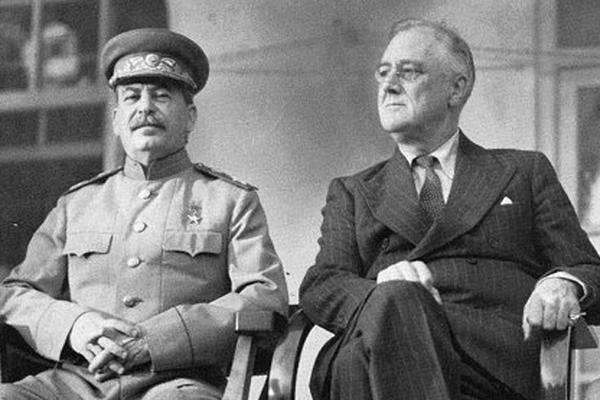
스탈린 루즈벨트.jpg

We saw in the last post that Secretary of State Byrnes began the discussion of Korea at the December 1945 Conference of Allied Foreign Ministers with a confused statement about the need for American and Soviet commanders to work out solutions to practical problems caused by the division of Korea into two occupation zones. Foreign Minister Molotov brought that discussion to an end by suggesting that “an examination of the question of a unified administration, trusteeship, and an independent government of Korea, as discussed by President Roosevelt and Generalissimo Stalin, would facilitate the settlement of these practical questions raised in Mr. Harriman’s letter.”

British Foreign Secretary Bevin took up Molotov’s suggestion, asking for a copy of the original agreement on trusteeship. Since there had been only a verbal discussion with no written agreement, Byrnes offered that the US delegation would prepare a paper on the matter for the next meeting. Since it was advantageous to let the Americans be the first to show their hand, Molotov agreed to defer discussion of Korea until the US document was presented.

The proposal the Americans presented the following day stated that “it has been generally understood” that the four-power trusteeship would last no longer than necessary to allow Koreans to form an “independent, representative, and effective government.” The proposal repeated the formula Byrnes had discussed the previous day regarding the creation of a unified administration under the two military commanders before concluding with a formula for trusteeship only slightly less vague than the Yalta agreement.

Acknowledging that “our ideas on the provisions of a trusteeship agreement have not taken definite form,” the US proposed a quadripartite authority that would act on behalf of the United Nations and the people of Korea. In accordance with Article 76 of the United Nations Charter, this authority would exercise the executive, legislative, and judicial powers needed to efficiently administer the country until a free and independent government was established. The authority would consist of a High Commissioner and an Executive Council that would, aside from promoting the progressive political, economic, and social advancement of the Korean people, “establish a popularly elected Korean legislature and an adequate Korean judicial system, all for the purpose of bringing into being an independent Korean Government within a period of five years.”

I would suggest at this point that such an agreement might have worked if the trusteeship partners had been the United States and Great Britain, countries with similar political values and institutions. In fact, Bevin responded favorably to the proposal, suggesting that the matter be referred to specialists for implementation, as the British government would have “no violent conflict with regard to these principles.” However, for the US to propose that it would work together with Stalin’s Soviet Union to promote the “political, economic, and social advancement” of Korea was clearly absurd, given the two countries’ diametrically opposed political and social systems.

American diplomats familiar with the Soviet Union understood well that this formula was not only absurd but also dangerous. The future architect of containment policy, George F. Kennan, who was then serving at the US Embassy in Moscow, believed that the conference should not have been held in the first place, since it was unlikely to produce anything of substance and would instead only cloak with legitimacy the USSR’s imposition of dictatorship in the areas it occupied. Regarding Byrnes’ determination to reach some kind of agreement, on this and other issues on the agenda, in order to gain political advantage at home, Kennan astutely observed that “the realities behind the agreement, since they concern only such people as Koreans, Romanians, and Iranians, about whom he knows nothing, do not concern him. The Russians know this. They will see that he pays a heavy price in the things that are real.”

Kennan recalled later that Molotov “sat leaning forward over the table, a Russian cigarette dangling from his mouth, his eyes flashing with satisfaction and confidence as he glanced from one to the other of the foreign ministers…He had the look of a passionate poker player who knows that he has a royal flush and is about the call the last of his opponents.”

In the next post, we will see precisely how, with regard to Korea, Foreign Minister Molotov exacted a “heavy price in the things that are real.”

[Sources: George F. Kennan, Memoirs: 1925-1950; Foreign Relations of the United States, 1945, Volume II]


This page is synchronized from the post: ‘(Korean War History) The Division of Korea, 1945-1948. Post #13’
(Korean War History) The Division of Korea, 1945-1948. Post #12

Prof. Kathryn Weathersby

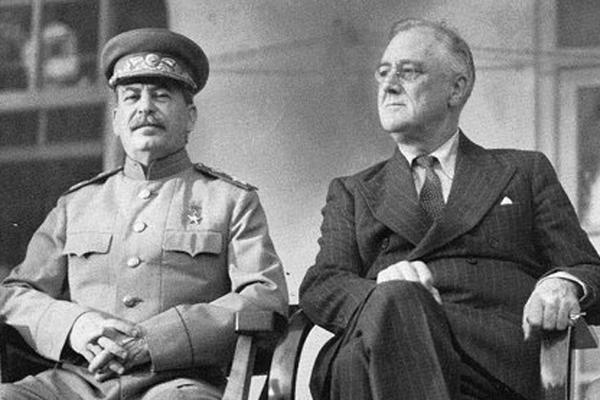
스탈린 루즈벨트.jpg

For the United States, the occupation of the southern half of Korea was an economic burden, as it had to prop up the food supply, power supply, etc. of a region with few valuable resources of its own. For the Soviets, however, control of the mineral-rich, industrialized north of Korea was an important means to secure resources that their war-torn country badly needed. Therefore, as the Foreign Ministry prepared to discuss a Korea settlement at the Moscow Conference of Allied Foreign Ministers in December 1945, Soviet diplomats worked out plans to ensure continued control over the economic assets in their zone.

One way to do that was to claim, as a briefing paper recommended, that all Japanese military industry and heavy industry were war trophies that must be transferred to the Soviet Union as partial reparations. Since Soviet participation in the war against Japan in 1945 had been so brief, these resources would also be considered compensation for “the huge damage inflicted by Japan on the Soviet Union throughout the time of its existence, including the damages from the Japanese intervention in the Far East from 1918-1923.”

The Soviet government was well-informed about Japanese industrial properties in Korea and the country’s valuable mineral resources because its consulate in Seoul had prepared detailed reports on these assets in the last years of Japanese rule. It should be noted that Moscow adhered to a neutrality treaty with Japan until it declared war on August 9, 1945, and therefore continued to maintain a consulate in Seoul throughout the Pacific War. With knowledge of the location and nature of Korea’s resources, the Soviet Army sealed off its sector economically as soon as it began its occupation. The Red Army allowed people to cross the 38th parallel to the south but stopped the flow of electrical power and coal. It also hindered transport, mail delivery, and many other functions important to daily life.

Soon after the US Army arrived in the South in mid-September, American officers travelled to Pyongyang to invite their Soviet counterparts to join them in Seoul for discussions on the immediate problems created by the division at the 38th parallel. Soviet officers did not respond to the invitation, however. Not only did they want to secure the north’s resources for themselves, but they also did not want the Americans to prevent them from dismantling Japanese-built industrial plants and sending the equipment by railroad to the Soviet Union.

American interference in economic affairs was a real possibility. On November 8 US Ambassador Harriman presented a letter to Stalin repeating the earlier American request that the two occupation commands meet to discuss how to resume trade, railroad transportation, and coastal shipping, establish uniform fiscal policies, and other urgent matters. Fearing that such discussions would interfere with Soviet confiscations of “war trophies” the Foreign Ministry recommended instead that the two powers create a Special Soviet-American Commission that would “resolve the immediate questions arising from the fact of the presence on the territory of Korea of Soviet and American troops.”

We can understand, therefore why the Soviet delegation to the Moscow Conference was alarmed when Secretary of State Byrnes began the discussion of Korea by raising these “immediate questions” rather than addressing the creation of a unified government, the subject that was on the agenda. Byrnes asked Molotov whether Moscow was prepared to authorize the Soviet commander in Korea to start negotiations with his American counterpart to solve the practical problems Harriman had enumerated in his November 8 letter. Molotov objected that Harriman’s letter did not concern the issue placed on the agenda, which prompted Byrnes to make matters worse by explaining that he mentioned the letter because it contained the ideas of the US government about what would be the first step toward establishing an independent Korean government. However, when Molotov resisted, Byrnes stated that Harriman’s proposal would be a step toward establishing a trusteeship. The foreign minister naturally insisted that he did not understand how these questions were related and would like to have this explained.

In the next post, we will look at how the discussion over Korea proceeded from this unpromising and confused beginning, leading toward the conclusion of a completely unworkable agreement on trusteeship.

[Sources: Suzdalev, “A Report on Japanese Military and Heavy Industry in Korea,” December 1945. Archive of the Foreign Policy of the Russian Federation, Fond 0102, Opis 1, Delo 15, Papka 1, Listy 22-29; Jacob Malik, “On the Question of a Single Government in Korea,”; The transcript of the Moscow discussions are in Foreign Relations of the United States 1945 Volume II.]


This page is synchronized from the post: ‘(Korean War History) The Division of Korea, 1945-1948. Post #12’

(편집자 칼럼) 트럼프의 미북 정상회담 취소 결정을 보면서

트럼프가 미북정상회담을 전격적으로 취소했다. 어안이 벙벙하다. 트럼프와 김정은은 비슷한 사람이라는 이야기를 누군가가 한 적이 있다. 정말 그런 것 같다. 우리는 이런 현상을 어떻게 이해하고 생각해야할까 ?

먼저 트럼프가 왜 미북정상회담을 취소했는지 그 배경을 이해해보자. 물론 트럼프의 머리속에도 들어가보지 않았고 미북간에 어떤 내용의 이야기가 오갔는지는 알 수 없다. 아마 앞으로도 영원히 알 수 없을런지 모른다. 대부분은 그냥 막연한 추측에 불과하다. 그러나 그런 막연한 추측이라도 해야하는 것이 우리의 입장이다.

트럼프가 미북정상회담을 취소한 것을 한마디로 요약하자면 이번 회담에서 바람직한 결과가 나오기 어렵다고 판단해서일 가능성이 높다. 회담은 회담자체가 중요한 것이 아니다. 회담을 통해서 어떤 결과가 도출되어야 하는데 그러기 어렵다는 판단이 섰기 때문일 것이다. 통상적으로 정치인의 경우는 담화문의 내용을 이러 저리 다듬어서 마치 뭔가 큰 성과를 거둔 것 처럼 위장을 한다. 그런데 트럼프는 사업가 출신이라 분명한 결과가 아니면 어정쩡하게 포장해서 나중에 제대로 후회할 일을 하지 않는다는 것이다.

그간에 어떤 일이 있었는지는 알 수 없다. 그러나 미루어 짐작할 수 있는 것은 미북의 실무진간 정상회담을 위한 사전 의제 조율이 있었을 것이고 거기에서 만족할 만한 성과가 나오지 않았을 것이라는 것이다. 그리하여 트럼프는 회담을 위한 회담을 하지 않을 것이며 분명한 결과를 요구하는 것이 아닌가 하는 것이 본인의 추측이다.

그렇게 본다면 트럼프가 최근 북한 김계관과 최선희의 발언을 핑게삼아 회담취소를 한 것은 다음의 수순을 위한 고도의 술수인지도 모르겠다. 어떻게 보면 김계관과 최선희는 트럼프가 회담 취소 결정을 할 수 있도록 도와준 것인지도 모르겠다. 트럼프로서는 기대한 만큼의 결과가 나오지 않을 회담을 취소할 수 있는 명분을 준 김계관과 최선희가 고마울 수도 있을 것이다.

이번에 트럼프가 이런 결정을 한 것은 많은 영향을 미칠 것이다. 우선 중국의 입장이다. 일부 언론에서는 이제 앞으로 중국이 중재자 역할을 하게 될 것이고 중국이 이익을 본 것이 아니냐고 하는 보도를 했다. 본인의 생각은 정반대다.

트럼프의 이번 결정으로 가장 큰 타격을 받은 국가는 중국이라고 생각한다. 이미 트럼프는 중국이 미북 정상회담에 대해 부정적인 역할을 하는 것을 경고한 바 있다. 앞으로 중국이 미북 정상회담의 중재자 역할을 할 수 있을 것이라고 생각할 수 없는 이유이다. 중재자란 양측으로 부터 모두 신뢰를 얻어야 한다. 그런데 이미 미국은 중국을 신뢰하지 않고 있다.

트럼프는 이번 결정을 통해 중국에게 경고를 하고 있는지도 모른다. 중간에 끼어 들어서 부정적인 역할을 하지 말라는 것이다.

트럼프의 이번 결정으로 타격을 받을 수 있는 집단은 바로 벼랑끝 전술을 구사해 온 북한의 강경파들일 것이다. 그간 북한은 대외관계에서 항상 벼랑끝 전술을 구사해왔다. 본인은 이번의 김계관 최선희 발언도 그런 연장선상에서 이해를 했다. 그런데 트럼프는 그런 접근 방식을 수용하지 않은 것이다. 물론 트럼프의 결정배경에는 그간 북한의 외교적 술책에 대한 경험축적이 있었을 것이다.

북한은 이번 트럼프의 회담취소 결정으로 나름대로 생각하고 있는 플랜에 상당한 영향을 받았을 것이다. 대외정책은 대내정책의 연장이다. 이것은 레닌이 한 말이다. 북한이 유화적인 정책을 들고 나온 것은 내부적인 영향이 있었다는 의미이다. 북한이 이번 회담을 통해 그간의 봉쇄를 해소하지 못한다면 내부적으로 상당히 어려움에 처할 가능성도 배제할 수 없다.

트럼프는 바로 그런 점을 노렸는지 모른다. 북한이 벼랑끝 전술의 효용성이 다했다고 느끼게 만드는 것 말이다. 북한 같은 작은 나라가 대외정책의 혼선을 빚는 것은 상당한 타격으로 작용할 수 있다. 그런 타격을 통해 북한내 강경파들의 입지를 약화시키기 위한 의도가 숨어 있다고 해석하는 것은 지나친 것일까 ?

우리 정부의 영향력이 약화될 것이라는 전망도 있는 것 같다. 본인은 그와 반대로 생각한다. 앞으로 북한은 미국과 회담의 연결고리를 이어가기 위해서 진정성을 보여야 할 것이고 그것은 남북관계이외에 다른 탈출구는 없다. 당분간 남북관계가 소강상태일지는 모른다. 그러나 앞으로 미북관계의 징검다리는 남북관계에서 시작될 확률이 높아질 것이다.
우리가 염두에 두어야 하는 것은 조바심을 내지 않는 것이다. 모든 것은 다 때가 있는 법이다.


This page is synchronized from the post: ‘(편집자 칼럼) 트럼프의 미북 정상회담 취소 결정을 보면서’

(한국전쟁사) 한국의 분단 1945 - 1948. Post # 11

웨더스비 교수 씀

스탈린 루즈벨트.jpg

소련 외무부는 1945년 12월 모스크바에서 열린 외무장관회담에서 한국문제에 대한 토의를 준비하면서, 소련 외교관들이 영국, 미국 그리고 중국 정부가 1943년 카이로 회담에서 일본 패배이후 한국이 독립해야한다는 것에 동의했다는 것을 언급하는 것으로 부터 출발했다. 소련은 카이로 회담에 참석하지 않았으며, 그것은 그들은 아직 일본과 전쟁에 들어가지 않았으며 전쟁목적에 대한 토의가 일본의 공격을 초래할 것을 두려워했기 때문이었다. 그러나 스틸린은, 독일이 항복하면 소련은 일본과 전쟁에 들어갈 것인즉 언급했던 1945년 2월의 얄타회담에서 루즈벨트 대통령에게 카이로의 결정에 동의한다고 말했다.

소련 외교관들은 또 한국을 공동으로 점령한지 3개월이 된 그 시점에서 이 나라의 모든 정치 그리고 사회 단체들이 자신들의 정부를 원하며 서울의 활동적인 단체들이 이런 정부를 조직하기 위해 앞으로 나가고 있다고 언급했다. 더우기 미국이 단일 통치조직의 수립을 지원하기 때문에, 소련이 이런 과정에 반대하는 것은 정치적으로 부당하다는 것이다. 우리가 살펴본 것 처럼 소련은 자신들이 점령한 지역에서 신속하게 별도의 통치조직의 창설을 추진해왔으나, 소련은 미국과 많은 전후 문제들에 협력할 필요가 있었기 때문에 한국문제에 대해 미국과 공개적으로 결별할 수 없었다.

소련 외무부의 해결책은 한국정부의 구성에 초점을 맞추는 것이었으며, 이는 “이 정부의 성격이 극동지역에서 우리의 정치, 경제 및 국방이익의 관점에서 한국의 미래 위치를 결정하는 결정적인 요인의 하나가 될 것”이기 때문이었다. 만일 소련과 미국 그리고 중국(불분명하게 영국으로 누락시킨)의 합의를 통해 정부를 수립할 경우, 이는 미국과 중국이 소련에 적대적인 “반동적인” 한국을 지원할 것이므로 모스크바에 우호적이지 않은 결과가 될 것이라는 것이다. 대신 소련은 남한내 좌파집단, 특히 하층계급의 힘에 의전하고자 했다. 그들은 연합국에게 한국에 단일정부를 수립할 수 있는 보통, 비밀, 평등 선거에 의해 선출된 인민 대표자 회의 소집을 제안했다.

개략 보고서의 작성자인 자콥 말맄은 동맹국들은 이 대표자 회의의 선거를 위해 밟아야 하는 복잡한 단계를 제시했다. 먼저 4개국 (여기서 영국은 포함되었다)은 한국 독립과 모든 사회적 정치적 조직들이 참가한 임시정부의 창설의 지원을 분명하게 표명해야 했다. 남한에는 공산주의자들의 지원을 받는 대중 조직들이 많았기 때문에, “모든 사회적 정치적 조직”의 참가는 모스크바의 기호에 맞는 것이었다. 다음은 선출된 임시 위원회가 제헌의회의 개최하여 여기서 정부를 선출하는 것이었다. 모든 인구계층의 참가를 보장하기 위해-모스크바 전략의 핵심- “광범위한 민주적 회의”가 도시와 마을에서 그리고 소비에트의 통상범주에 따라 노동자, 농민, 지식인, 교사, 피고용자그리고 여타 그룹으로 구분된 주민의 모든 분야에서 개최되어야 했다. 이 회의의 참가자들은 대표자와 공직자들의 후보를 호선하고 토의할 수 있다. 이런 과정을 통제하기 위해서 소련과 미국대표 그리고 가능하다면 중국과 영국으로 구성된 연합이 원회가 이런 회의를 감독할 수 있다.

이 회의를 준비하기 위해, 소련 외무부는 미국이 선호하는 한국지도자들의 정치적 시각에 대한 보고를 모았다. 이승만에 관한 서류는 그를 가장 반동적인 인물로 묘사하고 있다. 그 서류들은 “미국 자본의 진정한 노예, 이승만은 미국의 지원을 받는 한국 주주들과 자본가들이 일본 압제자의 자리에서 한국민의 목에 앉는 한국의 독립을 꿈꾸고 있다”고 결론을 맺고 있다. 김구의 대해서는 “의문의 여지없이 미국인들은 자신들의 목적을 위해 한국의 이 반동적 지도자를 이용할 것이다”라고 했다.

다음 포스트에서 우리는 어떻게 소련이 일본의 건설한 산업시설을 “전쟁 전리품”이라고 주장했으며 어떻게 경제적 문제에 대한 논의가 한국에서 새로운 정부를 수립하기 위한 합의에서 벗어나도록 했는지를 살펴보도록 하겠다.

참고자료

Petukhov, “Soviet-American Occupation of Korea and the Question of Economic and Political Ties Between North and South Korea”;

Petukhov, Adviser, Second Far Eastern Department, Reports titled “Syngman Rhee” and “Kim Koo” 13 December 1945. Archive of the Foreign Policy of the Russian Federation, Fond 0102, Opis 1, Delo 9, Papka 1, Listy 33-48]


This page is synchronized from the post: ‘(한국전쟁사) 한국의 분단 1945 - 1948. Post # 11’

(Korean War) The Division of Korea, 1945-1948. Post #11.

Prof. Kathryn Weathersby

스탈린 루즈벨트.jpg

As the Soviet Foreign Ministry prepared to discuss the Korea question at the Moscow Conference of Foreign Ministers in December 1945, its diplomats began by noting that the British, American, and Chinese governments had agreed at their meeting in Cairo in 1943 that Korea would become independent after the defeat of Japan. The Soviets had not taken part in the Cairo conference because they were not yet at war with Japan and feared provoking a Japanese attack by discussing war aims. However, at the Yalta conference of February 1945, when Stalin stated that the USSR would enter the war against Japan once Germany surrendered, he communicated to President Roosevelt that he agreed with the Cairo decisions.

Soviet diplomats also noted that at this point, three months into the joint occupation of Korea, all political and social groups in the country wanted their own government and that groups active in Seoul were taking steps toward organizing one. Moreover, since the Americans supported the establishment of a single governing structure, it was politically inexpedient for the Soviet Union to oppose this step. As we’ve seen, Moscow had moved quickly to create a separate governing structure for its zone in Korea, but since the Soviet Union needed to cooperate with the US over many postwar issues, it could not openly break with the Americans over the Korea settlement.

The Foreign Ministry’s solution was to focus on the composition of the Korean government, since “the character of this government will be one of the decisive factors in determining the future position of Korea from the point of view of our political, economic, and defense interests in the Far East.” If a government were created through an agreement between the Soviet Union, the US, and China (inexplicably omitting Great Britain), its makeup would be unfavorable to Moscow because the US and China would support “reactionary” Koreans hostile to the Soviet Union. Instead, the Soviets would rely on the strength of leftist groups in the South, particularly among the lower classes. They would propose that the allies convene a Representative People’s Assembly that would be elected through universal, secret, and equal voting, which would then create a government for Korea.

Jacob Malik, the author of the briefing paper, laid out a complicated set of steps the allies should take toward holding elections for this Representative Assembly. First, the four great powers (this time including Britain) must express support for Korean independence and for the creation of a provisional government elected with the participation of all social and political organizations. Since there were many communist-backed mass organizations in the South, the participation of “all social and political organizations” would work in Moscow’s favor. Next, an elected provisional committee would convene a constituent assembly, which would then elect the government. To guarantee the participation of all strata of the population – the key to Moscow’s strategy – “broad democratic meetings” would be held in towns and villages and among sectors of the population, divided into the usual Soviet categories of workers, peasants, intellectuals, teachers, employees, and other groups. Participants in these meetings would nominate and discuss candidates for delegates and officeholders. To control the process, a joint commission composed of Soviet and American representatives, and possibly Chinese and British, would supervise the meetings.

To prepare for such meetings, the Foreign Ministry compiled reports on the political views of Korean leaders favored by the United States. The dossier on Syngman Rhee described him as the most reactionary of these individuals. It concluded that “as a true servant of American capital, Rhee Syngman dreams of creating an independent Korea in which, in place of Japanese oppressors, Korean landlords and capitalists supported by the USA will sit on the neck of the Korean people.” As for Kim Koo, “there is no doubt that the Americans will try to use this leader of the Korean reactionaries for their own purposes.”

In the next post, we will look at how the Soviets also sought to claim Japanese-built industries in Korea as “war trophies” and how discussion over economic issues threatened to derail agreement on creating a new government for Korea.

[Sources: Petukhov, “Soviet-American Occupation of Korea and the Question of Economic and Political Ties Between North and South Korea”; Petukhov, Adviser, Second Far Eastern Department, Reports titled “Syngman Rhee” and “Kim Koo” 13 December 1945. Archive of the Foreign Policy of the Russian Federation, Fond 0102, Opis 1, Delo 9, Papka 1, Listy 33-48]


This page is synchronized from the post: ‘(Korean War) The Division of Korea, 1945-1948. Post #11.’

(편집자 칼럼) 미북정상회담이 삐그덕 거리는 듯하다. 북한이 왜 저럴까 ? 1

북한이 미북정상회담에 딴지를 걸고 나왔다. 아닌게 아니라 미국이 조금 앞서간다는 생각이 들었다. 정상회담을 얼마 남겨 놓지도 않고 북한이 이렇게 나온 것을 어떻게 해석해야 할지 모르겠다. 현시점에서 우리에게 가장 중요한 일은 미북정상회담인 듯하다.
이번 미북정상회담의 결과에 따라 앞으로 남북관계는 물론 한반도 주변의 안보상황 전체가 재정리될 것이기 때문이다.

지금 북한의 모양을 보아서는 미북 정상회담을 보이코트 할 가능성이 적지 않은 것 같다. 언론에서는 북한이 정상회담에서 유리한 상황을 조성하기 위해 수작을 부리는 것으로 보는 경우도 있는 듯하다. 그러나 최근 북한의 태도를 보면 그렇게 만만한 상황은 아닌 듯 하다.

만일 북한의 이번 보이코트 소동이 단순히 대화의 주도권을 쥐기 위한 것이라면 큰 문제는 아니다. 그냥 회담이 이루어지고 미국이 생각한 것 처럼 북한은 핵을 폐기하겠다고 약속을 하고 미국은 북한을 위해서 경제적 지원을 하면 된다. 그리고 평화협정을 맺어서 미국과 북한간 적대관계를 청산하면 되는 것이다. 아마 최선의 상황은 그렇게 흘러갈 것이다

그런데 만일 그렇지 않다면 앞으로 어떻게 될까? 전략이란 미리 생각해 놓는 것에 지나지 않는다. 기업이나 국가나 마찬가지라고 생각한다. 그런데 우리는 미리 생각해 놓는 것에 약하다. 프롯구성 능력이 떨어지고 시나리오 작성능력이 떨어진다. 앞으로 어떤 일이 일어날 것인가를 미리 생각하기 위해서는 인문학적 상상력이 필요하다. 그래서 문학과 역사 철학과 같은 인문학을 가르쳐야 하는 것이다. 창조력은 인문학적 상상력에서 비롯되기 때문이다.
자 하나씩 생각을 해보자. 만일 북한의 이번 반응이 단순한 전술적 수준이 아니고 고도의 전략적인 구상에서 비롯되었다면 어떻게 될 것인가 ?

첫번째 북한의 생각을 한번 읽어 보자.

편집자 생각에 만일 북한이 경제지원 정도로 핵을 포기하려고 생각했다면 핵은 만들지도 않았을 것이다. 북한이 미국에 기대어서 경제개발하는 것은 생각도 하지 않고 있다고 한 말은 그냥 허언으로 받아 들여서는 안된다.

아마도 북한은 그런 멘트를 통해 미국에 자신들의 핵문제와 딜을 할 수 있는 것은 경제적인 보상이 아니라는 것을 분명히 밝힌 것이아닌가 한다. 그럼 무엇일까 ? 아마 가장 중요한 것은 자신들의 안전을 확고하게 보장 받을 수 있는 방안일 것이다. 그것은 주한미군 철수가 될 확률이 많다.

북한이 남북정상회담에서 주한미군문제를 꺼내지 않은 것은 그문제가 남북간에 논의해서 해결될 문제가 아니라는 것을 잘 알고 있기 때문이다. DJ가 김정일과 정상회담할때 북한은 우리에게 주한미군 주둔 문제를 걸고 넘어가지 않았다. 일부언론에서는 북한이 주한미군문제를 꺼내지 않은 것을 주한미군의 주둔을 인정하는 것으로 해석하는 경우가 있었지만 성급한 평가일 수도 있다. 물론 주한미군의 존재가 중국의 북한에 대한 영향력을 희석시키는 경향이 없지 않겠지만 그렇다고 해서 북한이 해방이후 지금까지 주장했던 미국의 대북적대시정책이라는 전략적 화두를 쉽게 버리기 어려울 것이기 때문이다.

결국 북한이 바라는 것은 이번 회담을 통해 주한미군의 철수에 대한 확답을 받아 내는 것이 될 확률이 많다.
트럼프로서도 북한핵폐기와 주한미군 철수라는 딜의 조합이 결코 나쁘지 않다. 트럼프는 한국에 핵무장을 허용해서라도 주한미군 철수해야 한다고 주장했던 사람이다. 당연히 트럼프에게도 주한미군 철수와 북핵폐기는 좋은 조합이 아닐 수 없는 것이다.

주한미군의 철수는 북한 뿐만 아니라 중국과 러시아도 줄기차게 요구했었다. 특히 중국은 주한미군 철수를 강력하게 요구했다. 주한미군 철수는 북한뿐만 아니라 중국의 요구이기도 했다는 것이다.

만일 주한미군이 철수하면 어떤 일이 생길까 ? 북한핵이 폐기되고 평화협정이 체결되고 주한미군이 물러나면 한반도에 평화가 유지될 수 있을까 ? 과연 주한미군 철수는 단순하게 남북한만의 문제일까 ?
그렇지 않다고 생각한다. 주한미군의 존재는 이제 단순한 남북간의 문제가 아니라 동북아 안보전반에 심각한 영향을 주는 사안이다. 세상일이 그렇게 만만하지 않다.

좋은 쪽으로 보면 주한미군이 철수하고 북한핵이 폐기되면 남북한이 서로 사이좋은 형제가 될 수 있을 것이다. 나쁜 쪽으로 보면 주한미군의 철수로 한반도에서 힘의 균형이 무너져서 남한은 북한과 중국의 영향력하에 놓이게 되고 동북아에서 미국은 주도권을 상실하게 된다.

미국이 북한의 요구를 수용하지 않으면 어떻게 될까 ? 회담은 결렬될 가능성이 많다. 지금 북한이 보이고 있는 태도는 회담 결렬의 전조일 수도 있다.

만일 북한이 정상회담을 거부한다면 어떻게 될까 ? 그것은 다음에 더 생각해보도록 하겠다.

전략을 하는 사람들은 긍정적인 효과보다는 부정적인 상황을 더 걱정해야 한다.


This page is synchronized from the post: ‘(편집자 칼럼) 미북정상회담이 삐그덕 거리는 듯하다. 북한이 왜 저럴까 ? 1’

Your browser is out-of-date!

Update your browser to view this website correctly. Update my browser now

×