(한국전쟁사) 한국의 분단 1945 -1948, post # 17

웨더스비 교수 씀

#

스탈린 루즈벨트.jpg

이번 포스팅은 전편에 이어 북한에서의 토지개혁에 관한 부분을 다룬 내용입니다. 소련은 미소공동위원회가 개최되기 전에 토지개혁을 실시하였습니다. 미소 공동위원회가 개최되기 전에 이미 한반도를 점령한 미국과 소련의 점령군 사령관들은 남북분단으로 인해 발생한 문제를 해결하기 위한 회담을 하였습니다. 그러나 이미 그 회담에서 미국과 소련은 남북간 상호교역에 이견을 드러냈으며 그 이유는 소련이 자신들의 경제적인 이유로 북한에 경화를 지불할 수 없었기 때문이라고 설명하고 있습니다.

결국 소련은 자신들이 요구하는 방식의 권력이 북한에 들어서도록 하기 위해 토지개혁을 실시한 것입니다. 결국 모스크바 3상회의에서 한반도 분단의 큰 그림이 그려지고 분단의 구체적인 조치들은 그 이후에 하나씩 시행된 듯 합니다. 즉 분단의 내적 구조가 만들어지는 과정이 토지개혁이 아닌가 합니다. 바로 그런 점을 웨더스비 교수는 지적하고 싶어하는 것 같습니다.

아직 이 문제에 대한 웨더스비 교수는 자신의 평가를 분명하게 밝히지 않고 있습니다. 그녀가 어떻게 평가할지 궁금합니다.

한국의 점령 정책에 있어 미국과 소련의 방식이 다른 이유의 하나는 양국의 경제적 상황의 불일치였다. 미국은 제2차세계대전 이후 어떤 나라보다 막대한 부와 산업능력을 보유한 국가로 등장했으며, 반면 소련은 전쟁으로 인해 완전하게 파괴되었다. 결과적으로 모스크바는 1945년 적군(소련군)이 점령한 모든 지역, 유럽 및 아시아에서, 가능한 한 많은 경제적 이익을 확보하기로 결정했다.

우리는 11월 미국이 38선 분단으로 조성된 시급한 문제들에 대한 리스트를 모스크바에 제출한 것을 보았다. 미국무장관 번즈는 12월 모스크바 3상회의에서 한국문제에 대한 토의를 시작할때 이 안건들을 제기했다. 회의는 신탁통치의 메카니즘을 만드는 것에 촛점에 두기로 결정했으며, 양 개 점령군 사령관이 11월 미국이 제기한 경제적인 문제를 논의하기 위해 신속하게 만나기로 하는 조항을 포함하고 있었다. 따라서 1월 16일 소련과 미국 대표는 서울에서 분할로 인한 실질적인 문제를 논의하기 위해 회담을 했다.

소련대표단 수장인 슈티코프는 양 개 군사령관 간 상품의 교역에 관한 문제들에 대한 것으로 안건을 분명하게 규정했다. 게다가 그는 이런 교역은 물물교환을 통해 이루어져야 한다고 주장했으며, 이는 북한에 공급하기 위해 부족한 경화를 지출하는 것을 피하기 위한 것으로 추측되었다. 그는 남한지역에 필요한 북한의 전기, 석탄 및 공산품을 역시 남한에서도 공급이 부족한 쌀과 교환하여 넘겨줄 수 있다고 주장함으로써 회담을 교착으로 몰고갔다. 미국은 이런 조건의 수용을 거부했으며, 양측은 남북간 제한된 우편과 수송을 회복하고 라디오 주파수의 할당 그리고 공동통제 초소들의 설립과 양 점령측이 자신들의 행동을 조율하기 용이하게 하는 다른 조치들에 대해서만 합의했다.

모스크바 회담 직전 소련은 북한에 소비에트 방식의 경제체제를 위한 기반을 신속하게 구축하기 위한 조치를 취했다. 첫번째이자 가장 기본적인 단계는 소련에서의 조치 - 지주들로부터 땅을 빼앗아 농민들들에게 재분배 - 와 같았다. 그들은 공산당을 동원했으며 최근 설립된 정부조직이 3월말 미소공동위원회가 개최되기 전에 토지개혁을 수행토록 했다.

3월 5일 임시인민위원회는 개인과 기관이 보유하고 있던 다음과 같은 토지를 몰수하기 위한 법을 통과시켰다 : 일본국가와 일본인, “일본의 권력기관과 적극적으로 협력한 조선인민에 대한 배신자 그리고 일본의 질곡으로부터 조선의 해방시기에 조국을 떠난 사람들, 5전(일본식 단위인 단에 대한 러시아아 음차인 듯함) 이상의 농장을 소유한 한국인 지주, 자신들이 농사를 짓지 않고 자신의 모든 토지를 임대하는 지주, 크기에 상관없이 소유자들이라도 조직적으로 임대를 하는 작은 토지의 보유자 그리고 5전이상의 토지를 보유한 교회.
법률은 인민위원회가 지주들의 트랙터, 농기계, 부속건물과 부동산및 산림과 관계수로 그리고 다른 기계장비에 대한 통제를 실시하며 이것들을 농민들에게 분배할 것을 규정했다. 이 시기에 서울의 소련 영사관에 근무했던 샤브쉬나(F.I. Shabshina)에 따르면, 100만 전 이상의 토지가 몰수되었으며 72만 5천명의 농민들에게 분배되었다.

토지개혁에 대한 모든 기록들이 아직 공개되지 않았으나, 소련의 문서들이 이법에 대한 격렬한 반대에 대해서도 언급하고 있는 것을 볼 수 있다. 이 문서들은 또한 당원들이 “지나친 질투”를 사용한 경우를 언급하고 있기도 하다. 다른 많은 나라에서도 일어난 것 처럼, 공산당의 토지개혁은 인간의 탐욕을 해결하기 위한 방법으로 이용되었다. 어떻든간에 5 주 이후 김일성은 당조직국의 확대회의에서 토지개혁은 “국가의 봉건적 관계를 파괴하였으며, 북한의 완전한 경제발전을 위한 기초를 놓았다”고 보고했다.
다음 포스팅은 소련 외무부가 3월 20일의 미소공동위원회 개최를 위한 소련 대표단에게 보낸 지시를 검토할 것이며, 그 지시는 “민주적” 국가라는 것이 임시정부가 될 수 있도록 공동위원회가 조성해야 하는 구체적인 내용들을 담고 있었다.

[참고자료]

Foreign Relations of the United States, 1946, Volume VIII

F.I. Shabshina, “Koreia posle vtoroi mirovoi voiny [Korea after the second world war,” Akademiia nauk SSSR [Academy of Sciences USSR] Krizis kolonial’noi sistemy natsional’no-osvoboditel’naia borba narodov vostochnoi asii [Crisis of the colonial system, national-liberation struggle of the peoples of East Asia] (1949); Russian State Archive of Social-Political History, Fond 17, Opis 128, Delo 205]


This page is synchronized from the post: ‘(한국전쟁사) 한국의 분단 1945 -1948, post # 17’
(한국전쟁사) 한국의 분단 1945 - 1948, post # 16

웨더스비 교수 씀

#

스탈린 루즈벨트.jpg

그동안 번역작업을 하지 못했습니다. 지난 번의 포스팅에 이어 이번에는 소련이 어떻게 북한이 권력을 수립할 수 있도록 준비시켜나갔는가를 정리했습니다. 소련은 미소 공동위원회가 개최되기도 전에 이미 북한 단독 정부를 수립하기 위한 준비를 하고 차근차근 준비하고 있었다는 것을 정리한 글입니다.

#

동시에 북한의 소련 지도부는 남로당에게 모스크바 회담의 신탁통치결정을 지지할 것을 지시했으며, 또한 북한지역에서 합의에 대한 지지를 확실하게 하기 위한 조치를 취했다. 그들은 신문에 그런 내용을 게재하고 그런 내용을 팜플렛으로 분배했다. 가장 중요한 것으로, 그들은 1월 4일 5개도 임시 인민위원회의를 소집했으며, 이 기구에 대부분의 민족주의자들이 불참하도록 함으로써 모스크바 회담의 합의를 보장하도록 했다.

그러나 소련 군 장교와 공산당 지도자들은 조만식이 신탁통치를 지지하도록 설득할 수 없었다. 위대한 민족주의 지도자는 위원회의 수장으로 남아 있으라는 그들의 모든 호소를 거부했다. 그대신 그는 자신의 지위를 사임함으로써 1월 4일의 부정한 투표에 항의했다. 한편, 그가 더이상 중립적 정당과의 협조를 보여주는 증거로 더이상 유용하지 않았기 때문에, 소련군 지도부는 그를 가택연금을 시켰다. 그의 추종자들 대부분은 자신의 안전을 우려하여 서울로 넘어갔다.

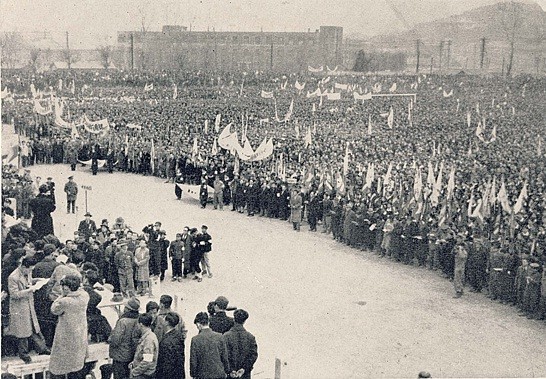
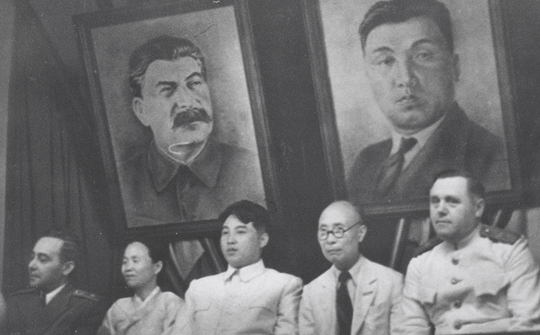
신탁통치를 반대하는 대중적인 인기가 높은 지도자를 신속하게 제거하고, 슈티코프는 1월 6일 평양에서 모스크바 회담의 결정을 지지하는 군중 시위를 조직했다. 그들이 모스크바에 보내 소련의 신문에 보도한 언론의 추산에 따르면, 10만명의 참가자들은 레닌, 스탈린 그리고 김일성의 초상화를 들고, 태극기, 성조기, 영국기 및 중국국기를 흔들었으며, 신탁통치 결정을 완전하게 승인할 뿐만 아니라 조선 인민들은 자신들의 해방자인 적군(소련군)과 그 지도자 스탈린 원수에 감사한다는 기치도 내걸었다. 기치는 “모스크바 3상회의는 조선의 자유, 독립 그리고 민주주의 건설을 보장한다”라고 주장했다.

북한에서 신탁통지에 대한 반대를 무력화시킨 소련군은 남한의 비공산주의 정치지도자들을 비민주주의자로 규정했으며 이는 새로운 국가 정부의 구성에 그들이 참가할 자격을 박탈하기 위한 방법이었다. 1월 12일 소련 공산당의 이즈베스치야 신문은 이승만, 김구 그리고 그들의 추종자들을 한국의 역사에 “새로운 시대”의 표시로 칭송받고 있는 모스크바 합의를 반대하는 반동분자이며 친일파라고 비난했다

조만식의 추종자들이 자신들의 안전에 두려움을 느낀 것은 옳은 일이었다. 12월 말 소련의 고위관리인 소련군의 정치행정 책임자는 개인적으로 북한지역에서의 정치적 상황을 점검했다. 그는 몰로토프에게 촌락에서지주들의 경제적 우위가 북한의 향후의 민주적 전환을 심각하게 방해하고 있으며 대중들의 정치적 활동의 성장을 방해하고 있다고 보고했다. 소련의 담론에서 “민주적”이란 서방에서 사용되는 용어로서의 정치적 민주주의를 의미하지 않으며, 막시스트 류의 사회민주주의를 의미하고 있다. 다시 말하면 “민주적”이란 열성적인 공산주의가 아니라고 하더라도 친공산주의를 말하는 것이다. 쉬킨은 권력의 중앙집권화와 이를 소련이 정의한, 조선의 “민주적” 인물에게 넘길 필요가 있다고 결론을 맺었다.

이러한 목표는 자연스럽게 믿을 수 있고 훈련된 적절하게 충성스러운 인물을 필요로 했다. 쉬킨은 소비에트 인사부에 소련에 대해 우호적인 태도를 지닌 한국인들을 찾을 것을 제시했다. 이런 한국인들은 한국에서 소련의 정치적 위치를 강화해야 하며 한국의 경제적 정치적 삶을 올바르게 바로잡을 수 있어야 했다. 그는 또한 북한의 소련 지도부가 가능한한 신속하게 토지개혁을 실시할 것을 주장했다.

사실 소련 장교들은 이미 충성스런 요원들을 훈련시키고 있었다. 1945년 11월 그들은 평양에 정치학교를 설립하여 행정가와 기술자들을 준비하고 있었다. 그들은 대부분의 교육받은 사람들이 책임있는 위치를 차지하는 것을 금지했기 때문이 이것은 시급한 요구였다. 학교의 8개 분야중 절반은 경찰업무를 위한 요원을 준비했으며 이는 질서를 유지하기 위한 필요성을 의미했다. 나머지 절반은 당과 정부 그리고 사회조직-농민동맹, 청년동맹 또한 여성동맹 같은-을 위한 한국인들을 준비시키는 것이었다. 학생들은 볼세비키 역사를 160시간, 당 건설을 600시간 그리고 한국의 역사와 한국의 민족해방운동을 140시간, 현재의 정책을 150시간, 세계 경제 정치지리를 150시간 그리고 러시아어 70시간의 과정을 이수해야 했다. 1946년 4월 500명의 학생들이 이 과정을 수료했으며 1370명이 등록을 했다.

다음 포스트에서는 어떻게 소련의 지도부와 공산주의자들이 미소공동위원회가 작동하기도 전에 어떻게 북한에 대한 경제적 정치적 통제를 신속하게 확보했는가를 알아 보도록 하겠다.

[참고문헌]

Russian State Archive of Social-Political History, Fond 17, Opis 128, Delo 205, Listy 2-4;

Scalapino and Lee, The Korean Communist Movement, Part I;

Joungwoon A. Kim, “Soviet Policy in North Korea,” World Politics Vol. 22, No. 2 (January 1970);

Archive of the Foreign Policy of the Russian Federation, Fond 18, Opis 8, Delo 78, Papka 6, List 2;

Jeon Hyun Soo, “Sotsial’no-ekonomicheskie preobrazovaniia v severnoi Koree v pervye gody posle osvobozhdeniia, 1945-1948” (Social-Economic Transformation in North Korea in the First Years after Liberation) Ph.D. Dissertation, Moscow State University, 1997]


This page is synchronized from the post: ‘(한국전쟁사) 한국의 분단 1945 - 1948, post # 16’

(편집자 칼럼)미북정상회담을 보면서, 한국정치 지형도에 미친 영향

역사적인 미북정상회담이 종료되었다. 한국전쟁 종전 65년만에 미국과 북한의 지도자가 서로 만났다. 회담이 끝나고 나니 보수적 경향의 신문에서는 미북정상회담에서 북한이 완승했다는 이야기를 한다. 외교적 협상에 대해서는 항상 평가를 달리한다.

누가 이겼는가는 시간이 흘러가야 알 수 있다. 누가 어떤 전략을 구사했고 자신의 목적을 달성했는가는 역사가 평가하기 때문이다. 인간은 미래를 알 수 없다. 따라서 이번 미북 정상회담의 결과를 보고 북한의 완승이라고 주장하는 것은 주식시세판을 보고 주식가격이 올라갈 것인지 내려갈 것인지를 예측하는 것과 같다. 인간의 예측은 그렇게 정확하지가 않다. 아니 오히려 정반대인 경우가 더 많다.

북한이 완승을 했다는 사람들은 아마도 2차세계대전 이전 영국 수상 챔벌린은 히틀러에게 유화정책을 펼치다가 제2차 세계대전이 일어났다는 사실을 떠올릴지도 모르겠다. 그러나 필자는 한국전쟁 65년만에 미국과 북한의 정상이 서로 만나 이야기를 했다는 사실이 중요하고 그것이 바로 역사적 성과라고 생각한다.

양국간에 문제를 해결하는 방법은 대화와 전쟁 두가지가 있다. 이도 아니고 저도 아닌 것은 없다. 트럼프로서는 전쟁을 위협하면서 대화로 문제를 해결하고자 했다. 물론 마지막까지 북한을 압박하는 기술적인 측면에서는 아쉬움이 없지 않다. 그러나 양국 정상회담을 했다는 사실 자체가 매우 의미있다.

혹자들은 남북정상회담을 했지만 그 이후 별 성과가 없지 않았느냐고 할지도 모르겠다. 그러나 남북관계에서의 정상회담과 미북간의 정상회담은 그 성격이 다르다. 북한은 남북정상회담을 미국과의 대화를 위한 징검다리로 생각했을 뿐이다. 이제 북한은 미국과 정상회담을 가졌다.

앞으로 어떤 일이 벌어질까 ? 앞으로 벌어질 일을 나열해 보면 비교적 비교적 분명하게 드러날 수 있다.

첫번째 북한이 핵, 미사일을 그대로 가지고 미국과 한국은 북한과 관계 정상화 하고 경제적으로 지원하는 경우

두번째 북한이 핵, 미사일을 폐기하고 미국과 한국이 북한에게 경제적인 지원을 하고 관계 정상화하는 경우

세번째 북한이 핵, 미사일을 그대로 가지고 미국과 한국은 북한과 적대적인 관계를 계속하는 경우

네번찌 북한이 핵, 미사일을 폐기하고 미국과 한국은 북한을 적대적으로 상대하는 경우

복잡해 보여도 앞으로 북한핵문제는 위의 4가지 범주에서 진행될 것이다.
우리가 지향하는 것은 두번째일 것이다. 하나 하나 두고 따져보면 앞으로의 세계가 어떻게 진행될 것인가를 미루어 짐작할 수 있다. 어떠한 과정을 거치더라도 결국 첫번째 아니면 두번째의 상황으로 전개될 것이다. 결국 시간의 문제이다.

북한 문제에 대해서 언급한 일전의 포스팅에서 여러번 문제의 핵심은 북핵문제 자체가 아니라 미국과 중국간 차세대 패권경쟁에서 유리한 고지를 차지하기 위해 북한을 어떻게 다룰 것인가 하는 것이라는 점을 언급한 바 있다.

중국이 남한을 다루는 방식이나 미국이 북한을 다루는 방식이나 크게 다를 것이없다. 미국은 북한을 자신편으로 끌어 들이기 위해 노력하고 있고 중국은 남한을 자신편으로 끌어 들이고자 하는 것이다.

필자는 박근혜의 몰락과정에 어설프게 중국의 전승기념절에 참가한 것이 상당부분 작용하지 않았나 하고 생각해보기도 했다. 강대국과의 관계에서 어설프게 나서다가는 국가의 존망이 위협받을 수도 있는 법이기 때문이다.

이번 미북 정상회담은 우리가 직면한 안보문제의 본질을 정확하게 인식하게 한 계기였다는고 하는데 중요한 의미가 있는 듯하다.

이제까지 북한문제는 한국 정치의 지형을 결정하게 하는 중요한 요소였다. 북한과 대화하자는 정치세력은 진보였고 북한을 힘으로 억제해야 한다는 세력은 보수라고 했다.

우리 한국정치의 지형도는 사회적 경제적 문제에 대한 입장보다 북한에 대한 입장에 따라 이리저리 왔다 갔다 했던 것이다. 그랬던 것들이 미북 정상회담 한번으로 모두 붕괴되었다.

그동안 우리가 보수와 진보라고 했던 것들이 결국은 미국 대통령이 마음 한번 먹기에 따라 무너질 수 밖에 없는 취약한 기반위에 있었다는 것이다.

이는 우리가 이제까지 말해 온 보수와 진보의 개념이 사상누각이었다는 것을 의미하는 것이다.

결국 미북정상회담은 미북관계의 변화 그리고 남북관계의 변화는 물론이고 남한 내부의 정치세력의 지형도 형성에 영향을 미친 것이다.

사실 정상회담이라는 것은 국제관계의 변화라는 측면에서 매우 중요한 의미를 지니고 있다. 그러나 이번 미북정상회담은 한국의 정치지형도에 결정적인 타격을 가했다는 면에서 더 중요한 의미를 지니고 있는 듯 하다.

역사는 항상 우리가 예기치 못한 방향으로 흘러간다. 이번 미북 정상회담은 남한의 정치지형도를 바꾸어 버렸다.
그것이 이번 미북 정상회담의 가장 큰 성과라고 생각한다.


This page is synchronized from the post: ‘(편집자 칼럼)미북정상회담을 보면서, 한국정치 지형도에 미친 영향’

(Korean War)The Division of Korea, 1945-1948. Post #18

Prof. Kathryn Weathersby

The Joint Soviet-American Commission created by the Moscow Conference agreement on trusteeship was to begin work in Seoul on March 30, 1946. To prepare, the Soviet Foreign Ministry drafted a directive to its delegation that described in detail the kind of government they must create for Korea and how it should be established.

The key was Moscow’s definition of “democratic.” For the USSR, democracy meant social democracy, not political democracy. A country was “democratic” if it divided its economic resources on an equal basis, not if its people freely elected their government. The Korean parties to be labelled “democratic” were therefore those that advocated land reform and other socialist policies, and it was only such parties that the Joint Commission should consult to create a Provisional Government.

After identifying which parties and social organizations were “democratic,” the Joint Commission must make recommendations about the Provisional Government’s structure and organizational principles, its political platform and personnel. “The Provisional Korean Democratic Government will be formed from representatives of the democratic parties and social organizations.” Its ministerial posts should be divided equally between the candidates put forth by the democratic parties and social organizations of North and South Korea and those candidates should be persons, “devoted to the Korean people, who are loyal to the allies and who have proven their readiness to fight for a democratic Korea.”

The Foreign Ministry then laid out the tasks the new government must fulfill. Since Moscow’s highest goal was to protect itself from a resurgence of Japanese militarism, the first task of the Korean Provisional Government must be the “final liquidation of the remnants of the former Japanese rule in the political and economic life of Korea, the struggle against the reactionary anti-democratic elements within the country, forbidding the activity of pro-fascist and anti-democratic parties, organizations, and groups.”

Second, the Provisional Government must create “local self-government in the whole territory of Korea through the People’s Committees, elected by the population on the basis of universal, direct, equal, and secret voting without discrimination by sex or religion.” To satisfy American concerns, the new government should pledge to secure “political freedom: freedom of speech, press, assembly, religion, activity of democratic parties, professional unions and other democratic organizations,” as well as “the inviolability of persons and domiciles, securing through law the private property of citizens.”

Moscow had for many years received extensive reports on conditions in Korea from its consulate in Seoul. Based on this information, the directive specified that the new government must replace the legislative and judicial organs established by the Japanese and must democratize Korea’s legal organs. It must introduce “universal free and obligatory schooling in the native language; broadening the network of primary, secondary, and tertiary schools,” and develop Korean culture, as well as “agriculture, industry, and transport to raise the people’s wellbeing.”

The Provisional Government must also carry out the kind of land reform already underway in the North. It should confiscate land “belonging to the Japanese and to Koreans who are traitors of the people, as well as large landowners,” end “the fulfillment system, and transfer all confiscated land without pay to Korean peasants.” It must confiscate “irrigation systems belonging to the owners of confiscated land and transfer them without payment to the Korean state.” It must “nationalize large-scale industry, banks, oil, forests, and railroad transport belonging to Japanese and Korean monopolies.” The directive noted that “small enterprises and immovable property that formerly belonged to Japanese residents in Korea and was officially seized by Koreans with the approval of the Soviet and American commands after the capitulation of the Japanese armed forces will not be subject to nationalization.”

Finally, the Provisional Government must create a “network of special schools for the preparation of cadres for the state apparatus, industry, transport, communications, agriculture, education, culture, and health care. Enumerating policies that would soon be carried out in the North, the directive ordered that the Provisional Government must ”establish control over market prices, struggle against speculation and usury, establish a single just tax system, introduce a progressive tax, introduce an 8-hour working day for workers and employees and a 6-hour working day for children from 13-16 years of age, forbid exploitation of labor of children under 13 years of age, provide job security for workers and employees, and establish a minimum wage, social insurance and labor protection.” It must also “broaden the network of medical institutions, struggle against epidemic diseases, and secure free medical care for the poor.”

In the next post, we will examine the Foreign Ministry’s instructions for how the Joint Commission would consult with “democratic parties and social organizations” and how these provisions were in fact used to prevent the creation of a provisional government.

[Source: 13 March 1946. Lozovsky to Molotov. Draft directive to the Soviet delegation at the Joint Soviet/American Commission on the Formation of a Provisional Korean democratic government. Archive of the Foreign Policy of the Russian Federation, Fond 18, Opis 8, Delo 79, Papka 6, Str. 4-11. The final draft is found in Fond 07, Opis 11, Delo 280, Papka 18.]


This page is synchronized from the post: ‘(Korean War)The Division of Korea, 1945-1948. Post #18’

(Korean War) The Division of Korea, 1945-1948, post # 17

Prof. Kathryn Weathersby

김일성과 소련.GIF

One of the ways the Soviets and the Americans differed in their approach to the occupation of Korea was a result of the vast disparity in their economic situations. The United States emerged from World War II with far greater wealth and industrial capacity than any other country, while the USSR was physically devastated by the war. Consequently, Moscow was determined to extract as much economic benefit as possible from all of the areas the Red Army occupied in 1945, in Europe as well as Asia. They thus created a physical division of Korea, along with the political one co-created with the Americans.

We have seen that in November the US presented Moscow with a list of concerns about physical problems in Korea created by the division at the 38th parallel. Secretary of State Byrnes then raised these issues at the beginning of the discussion of the Korean question at the Moscow Conference of Allied Foreign Ministers in December. While the conference decision focused on creating a mechanism for trusteeship, it also included a provision that the two occupation commands would meet soon to discuss the economic issues raised by the US in November. Accordingly, on January 16 Soviet and American representatives met in Seoul to discuss the practical problems caused by the sectoral division.

As head of the Soviet delegation, Shtykov tellingly defined the issue as a matter of exchange of goods between the two military commands. He insisted, moreover, that this trade must be conducted through barter, presumably to avoid expending scarce hard currency to supply northern Korea. He brought the meeting to an impasse by demanding that electrical power, coal, and manufactured goods from the north, all desperately needed in the southern zone, could only be delivered in exchange for rice, which was also in short supply in the South. The Americans refused to accept these terms, and the two sides agreed only to restore limited mail service and transportation between the zones, allocate radio frequencies, and establish joint control posts and other measures that would make it easier for the two occupiers to coordinate their actions.

In the wake of the Moscow Conference the Soviet authorities also acted quickly to create the foundation for a Soviet-style economic system in the North. The first and most basic step was the same as it had been in the Soviet Union itself – to confiscate land from landowners and redistribute it to peasants. They mobilized the communist party and the recently created government structures to carry out land reform before the Joint Commission would meet in late March. They could thereby ensure that regardless of what happened in Seoul, the Soviet Union would retain control over at least the northern half of the peninsula.

On March 5 the Provisional People’s Committee passed a law for the confiscation of land belonging to the following persons or institutions: the Japanese state or individual Japanese, “traitors to the Korean people who had actively collaborated with the Japanese organs of power and to those who had fled the country at the time of Korea’s liberation from the Japanese yoke, Korean landlords who owned farms of more than five chon [transliteration from the Russian that perhaps refers to the Japanese unit tan], landlords who did not carry on their farming and had given all their land on lease, owners of plots of land, who had, irrespective of its size, given it systematically on lease, and churches that had more than five chon of land.”

The law specified that the People’s Committees would seize control of the tractors, agricultural implements, outhouses, and estates of the landlords and distribute them to peasants, along with forests, irrigation and other technical equipment. According to F.I. Shabshina, who served in the Soviet consulate in Seoul during this time, more than one million chon of land was confiscated and distributed to 725,000 peasants.

The full records of the land reform have not yet been released, but Russian documents we do have refer to instances of violent opposition to the law. They also mention cases of party members using “excessive zeal.” As happened in many other countries, communist land reform was sometimes used as a way to settle personal grievances. In any case, after five weeks, Kim Il Sung reported to an enlarged plenum of the party’s Organization Bureau that the land reform “has destroyed feudal relations in the countryside, it has laid the foundation for the development of the entire economy of North Korea.”

The next post will examine the instructions the Foreign Ministry sent to the Soviet delegation for the opening of the Joint Commission on March 20, which laid out a detailed description of the “democratic” state that must result from the Provisional Government the Joint Commission was to create.

[Sources: Foreign Relations of the United States, 1946, Volume VIII; F.I. Shabshina, “Koreia posle vtoroi mirovoi voiny [Korea after the second world war,” Akademiia nauk SSSR [Academy of Sciences USSR] Krizis kolonial’noi sistemy natsional’no-osvoboditel’naia borba narodov vostochnoi asii [Crisis of the colonial system, national-liberation struggle of the peoples of East Asia] (1949); Russian State Archive of Social-Political History, Fond 17, Opis 128, Delo 205]


This page is synchronized from the post: ‘(Korean War) The Division of Korea, 1945-1948, post # 17’

(Korean War) Korean Divison 1945 - 1948, Post # 16

Prof. Kathryn Weathersby

신탁통치 반대.jpg

At the same time Soviet authorities in the North instructed the Korean Communist Party in the South to support the Moscow Conference decision on trusteeship, they also took steps to ensure support for the agreement in their zone. They published it in newspapers and distributed it as a pamphlet. Most importantly, they called a meeting of the Five Provinces Temporary People’s Committee for January 4, making sure this body would endorse the Moscow Conference agreement by arranging that most of the nationalist members would be absent.

The Soviet officers and communist party leaders were not able, however, to persuade Cho Man-sik to support trusteeship. The venerable nationalist leader refused all their appeals to remain in his post as head of the Committee. Instead, he protested the rigged vote of January 4 by resigning his position. Then, since he was no longer useful as a token to demonstrate cooperation with centrist parties, Soviet authorities placed him under house arrest. Most of his followers fled to Seoul, fearing for their own safety.

Acting quickly to head off popular opposition to trusteeship, Shtykov’s men organized a mass demonstration in Pyongyang on January 6 to declare support for the Moscow Conference decision. According to a press account they sent to Moscow for publication in Soviet newspapers, the 100,000 participants carried flags of Korea, the USSR, the USA, Great Britain, and China, along with portraits of Lenin, Stalin, and Kim Il Sung, and banners expressing not only full approval of the decision on trusteeship but also the Korean people’s gratitude to their liberators, the Red Army, and its leader, Generalissimo Stalin. “The decision of the Moscow conference of Three Ministers will secure the freedom, independence, and construction of democracy in Korea,” the banners proclaimed.

Having neutralized opposition to the agreement in the North, the Soviets began a campaign to define all non-communist leaders in the South as anti-democratic as a way to disqualify them from participation in the formation of the new national government. On January 12 the main newspaper of the Communist Party of the Soviet Union, Izvestiia, denounced Syngman Rhee, Kim Koo, and their followers as reactionaries and pro-Japanese collaborators for opposing the Moscow agreement, which it extolled as marking a “new era in the history of Korea.”

Cho Man-sik’s followers were right to fear for their safety. In late December, a high-ranking Soviet official, the Chief of the Political Administration of the Soviet Armed Forces, personally examined the political situation within the Soviet zone in Korea. He reported to Molotov that the economic domination of landlords in the villages had seriously impeded the further democratic transformation of Korea and had prevented the growth of the political activity of the masses. In Soviet discourse, “democratic” meant not political democracy, as the word was used in the West, but social democracy of a Marxist sort. In other words, “democratic” meant pro-communist if not outright communist. Shikin concluded that it was necessary to centralize power and transfer it into the hands of Korean “democratic” figures, as Moscow defined the term.

This goal naturally required that appropriately loyal persons be identified and trained. Shikin recommended that Soviet personnel find Koreans with a friendly attitude toward the USSR. These people could strengthen the Soviet Union’s political position in Korea and set right its economic and political life. He also urged the Soviet authorities in the North to carry out land reform as soon as possible.

In fact, Soviet officers had already begun training loyal cadres. In November 1945 they established a political school in Pyongyang to prepare administrators and technicians. This was an urgent need since they had barred most educated persons from holding responsible positions. Half of the eight departments of the school prepared cadres for police work, suggesting how pressing a need they had to maintain order. The other half prepared Koreans for positions in party, government, and social organizations – groups such as peasants’ league, youth league, or women’s league. Students followed a course of study made up of 160 hours of history of the Bolshevik party, 600 hours of party building, 140 hours of history of Korea and of the Korean national liberation movement, 150 hours of present policy, 150 hours of economic and political geography of the world, and 70 hours of Russian language study. By April 1946, 500 students had completed this course of study and 1370 others were enrolled.

In the next post we will examine how the Soviet authorities and Korean communists moved quickly to secure economic and political control over their half of Korea before the Joint Commission could do its work. They accomplished this task by sealing the border with the South and carrying out land reform.

[Sources: Russian State Archive of Social-Political History, Fond 17, Opis 128, Delo 205, Listy 2-4; Scalapino and Lee, The Korean Communist Movement, Part I; Joungwoon A. Kim, “Soviet Policy in North Korea,” World Politics Vol. 22, No. 2 (January 1970); Archive of the Foreign Policy of the Russian Federation, Fond 18, Opis 8, Delo 78, Papka 6, List 2; Jeon Hyun Soo, “Sotsial’no-ekonomicheskie preobrazovaniia v severnoi Koree v pervye gody posle osvobozhdeniia, 1945-1948” (Social-Economic Transformation in North Korea in the First Years after Liberation) Ph.D. Dissertation, Moscow State University, 1997]


This page is synchronized from the post: ‘(Korean War) Korean Divison 1945 - 1948, Post # 16’

Your browser is out-of-date!

Update your browser to view this website correctly. Update my browser now

×