Prof. Kathryn Weathersby
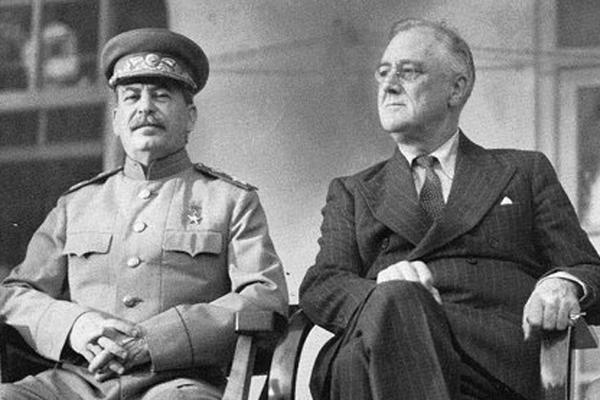
As the Soviet Foreign Ministry prepared to discuss the Korea question at the Moscow Conference of Foreign Ministers in December 1945, its diplomats began by noting that the British, American, and Chinese governments had agreed at their meeting in Cairo in 1943 that Korea would become independent after the defeat of Japan. The Soviets had not taken part in the Cairo conference because they were not yet at war with Japan and feared provoking a Japanese attack by discussing war aims. However, at the Yalta conference of February 1945, when Stalin stated that the USSR would enter the war against Japan once Germany surrendered, he communicated to President Roosevelt that he agreed with the Cairo decisions.
Soviet diplomats also noted that at this point, three months into the joint occupation of Korea, all political and social groups in the country wanted their own government and that groups active in Seoul were taking steps toward organizing one. Moreover, since the Americans supported the establishment of a single governing structure, it was politically inexpedient for the Soviet Union to oppose this step. As we’ve seen, Moscow had moved quickly to create a separate governing structure for its zone in Korea, but since the Soviet Union needed to cooperate with the US over many postwar issues, it could not openly break with the Americans over the Korea settlement.
The Foreign Ministry’s solution was to focus on the composition of the Korean government, since “the character of this government will be one of the decisive factors in determining the future position of Korea from the point of view of our political, economic, and defense interests in the Far East.” If a government were created through an agreement between the Soviet Union, the US, and China (inexplicably omitting Great Britain), its makeup would be unfavorable to Moscow because the US and China would support “reactionary” Koreans hostile to the Soviet Union. Instead, the Soviets would rely on the strength of leftist groups in the South, particularly among the lower classes. They would propose that the allies convene a Representative People’s Assembly that would be elected through universal, secret, and equal voting, which would then create a government for Korea.
Jacob Malik, the author of the briefing paper, laid out a complicated set of steps the allies should take toward holding elections for this Representative Assembly. First, the four great powers (this time including Britain) must express support for Korean independence and for the creation of a provisional government elected with the participation of all social and political organizations. Since there were many communist-backed mass organizations in the South, the participation of “all social and political organizations” would work in Moscow’s favor. Next, an elected provisional committee would convene a constituent assembly, which would then elect the government. To guarantee the participation of all strata of the population – the key to Moscow’s strategy – “broad democratic meetings” would be held in towns and villages and among sectors of the population, divided into the usual Soviet categories of workers, peasants, intellectuals, teachers, employees, and other groups. Participants in these meetings would nominate and discuss candidates for delegates and officeholders. To control the process, a joint commission composed of Soviet and American representatives, and possibly Chinese and British, would supervise the meetings.
To prepare for such meetings, the Foreign Ministry compiled reports on the political views of Korean leaders favored by the United States. The dossier on Syngman Rhee described him as the most reactionary of these individuals. It concluded that “as a true servant of American capital, Rhee Syngman dreams of creating an independent Korea in which, in place of Japanese oppressors, Korean landlords and capitalists supported by the USA will sit on the neck of the Korean people.” As for Kim Koo, “there is no doubt that the Americans will try to use this leader of the Korean reactionaries for their own purposes.”
In the next post, we will look at how the Soviets also sought to claim Japanese-built industries in Korea as “war trophies” and how discussion over economic issues threatened to derail agreement on creating a new government for Korea.
[Sources: Petukhov, “Soviet-American Occupation of Korea and the Question of Economic and Political Ties Between North and South Korea”; Petukhov, Adviser, Second Far Eastern Department, Reports titled “Syngman Rhee” and “Kim Koo” 13 December 1945. Archive of the Foreign Policy of the Russian Federation, Fond 0102, Opis 1, Delo 9, Papka 1, Listy 33-48]
This page is synchronized from the post: ‘(Korean War) The Division of Korea, 1945-1948. Post #11.’